Policy Opening of the Brain Innovation Days 2025
The Brain as a Strategic Asset: Securing Europe’s Future Through Innovation & Health
14th of October, 2025, European Parliament
The event “The Brain as a Strategic Asset: Securing Europe’s Future Through Innovation and Health” brought together Members of the European Parliament, scientists, patient representatives, and industry leaders to highlight brain health as a cornerstone of Europe’s resilience, competitiveness, and social cohesion. This event marked the policy opening of the 5th edition of the Brain Innovation Days. Hosted by MEP Tomáš Zdechovský and co-hosted by MEP Tomislav Sokol, the discussion marked a pivotal moment for recognising brain health as an EU-wide policy priority. With neurological and mental disorders costing the European Union between €800 billion and €1.4 trillion annually, speakers agreed that investing in the brain is investing in Europe’s future.
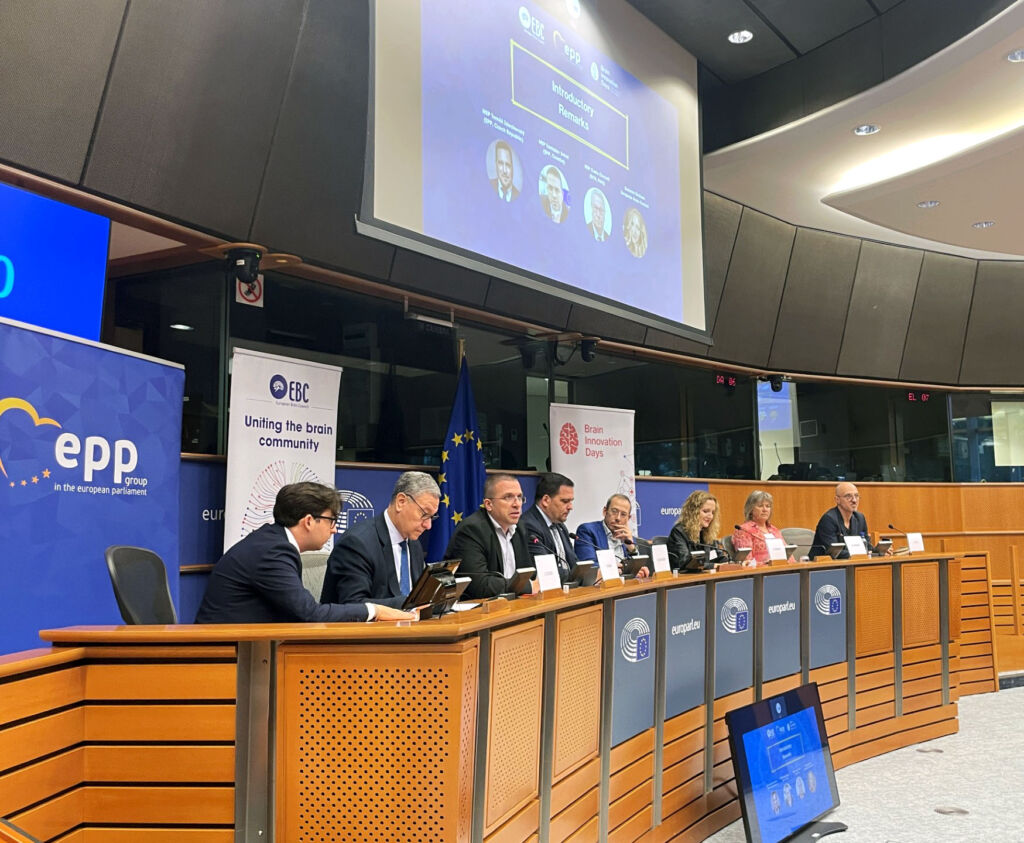
In his opening remarks, MEP Tomáš Zdechovský reflected on the European Parliament’s growing commitment to brain health over the past five years. He stressed the need for consolidation of Europe’s fragmented research landscape, while he called for a centralised model of excellence similar to Europe’s approach in cancer research. MEP Tomislav Sokol followed by outlining how revisions to the Pharmaceutical Legislation and the Critical Medicines Act can support access to brain-related medicines and clinical trials across all Member States. He advocated for a comprehensive EU Brain Health Strategy, modelled on the Beating Cancer Plan, with clear objectives, measurable outcomes, and significant funding.
MEP Carlo Ciccioli (ECR, Italy) emphasised that the brain is the foundation of human identity and Europe’s intellectual strength. Drawing on his medical background, he warned that longer life expectancy, social pressures and substance abuse are putting brain health under increasing strain. He called for stronger investment in brain research, education, and prevention, stressing that mental well-being, creativity, and social stability all depend on healthy brains.
The first panel, “Real-World Experiences and Unmet Needs”, moderated by Frédéric Destrebecq (EBC), focused on the patient perspective and the need for inclusive, stigma-free policies. Astri Arnesen (EFNA) and Péter Kéri (GAMIAN-Europe) underscored that patient experience and lived reality must guide EU policymaking. They called for systematic data collection on brain conditions, improved access to care and public awareness campaigns to combat stigma. Both highlighted that meaningful patient engagement, particularly in the design of strategies and funding programmes, will ensure that EU actions are relevant, equitable and sustainable.
The second panel, “Generating a Brain Research Ecosystem in Europe,” explored how to strengthen innovation and collaboration. Kirsten M. Danielsen (Danish Life Science Cluster) presented Denmark’s Life Science Lighthouse as a model for cross-sector cooperation based on trust, agility and public-private partnership. Pascal Maigné (French Agency of Biomedicine) introduced the European Charter for the Responsible Development of Neurotechnologies, developed under the EBC’s leadership, to ensure ethical governance of emerging brain technologies. Together, they emphasised that transparent cooperation between governments, industry and researchers is essential to create a dynamic European brain innovation ecosystem.
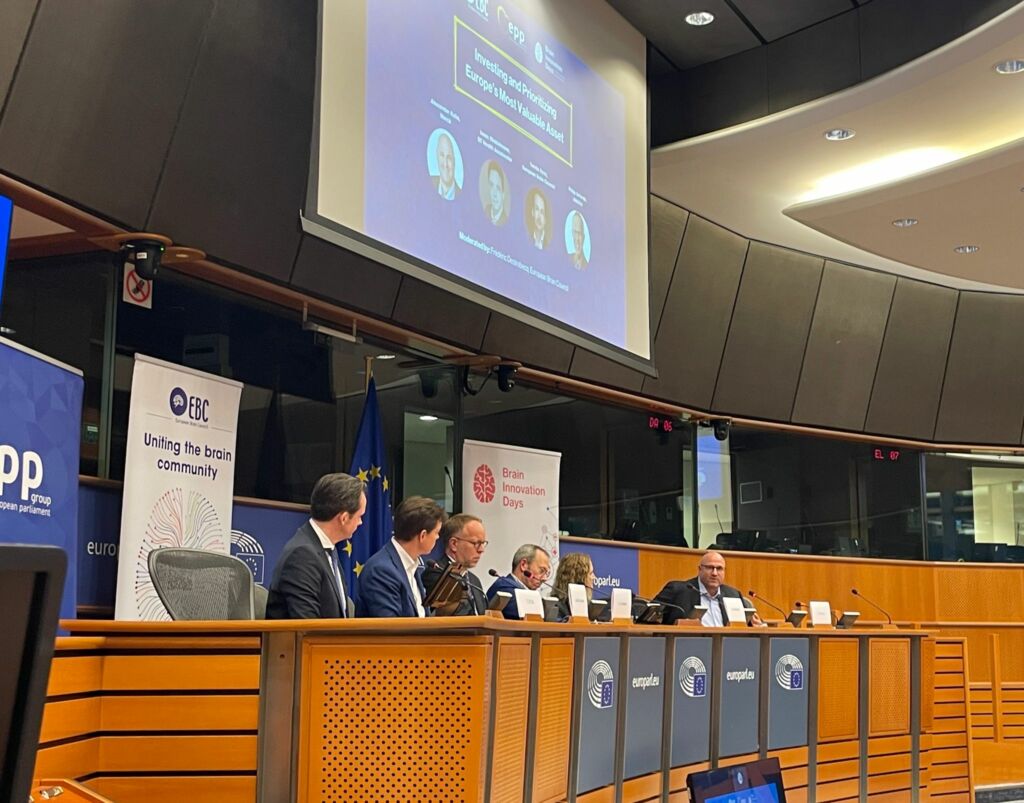
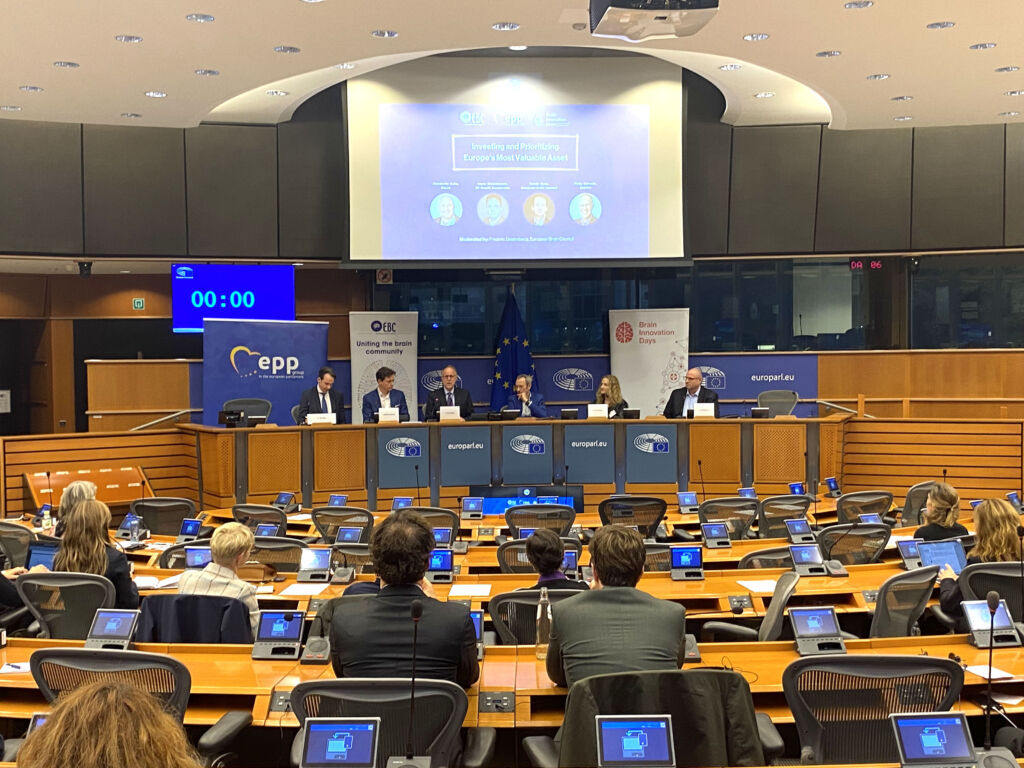
The final panel, “Investing and Prioritizing Europe’s Most Valuable Asset,” examined how Europe can turn political recognition into concrete investment. Philip Schwab (AbbVie) linked brain health to economic competitiveness, urging that the ongoing policy and regulatory developments integrate brain priorities. Alexander Kulla (Merck) stressed that predictable incentives and data-sharing frameworks are key to reviving neuroscience innovation, while Isaac Middelmann (EIT Health) outlined the potential of blended finance and outcome-based reimbursement models to scale brain-health solutions. Tomás Ryan (EBC) closed by framing neuroscience as Europe’s next strategic frontier, calling for long-term coordination and investment in brain research as the foundation of future prosperity.
In closing, the President of EBC, Suzanne Dickson summarised a clear message: Europe’s prosperity depends on the health of its citizens’ brains. Across all panels, participants agreed that brain health is not merely a medical issue but a strategic imperative for innovation, resilience and social well-being. With the European Partnership for Brain Health set to launch in 2026, this event marked a key milestone in Europe’s journey toward placing the brain at the heart of a healthier, smarter and more resilient continent.