
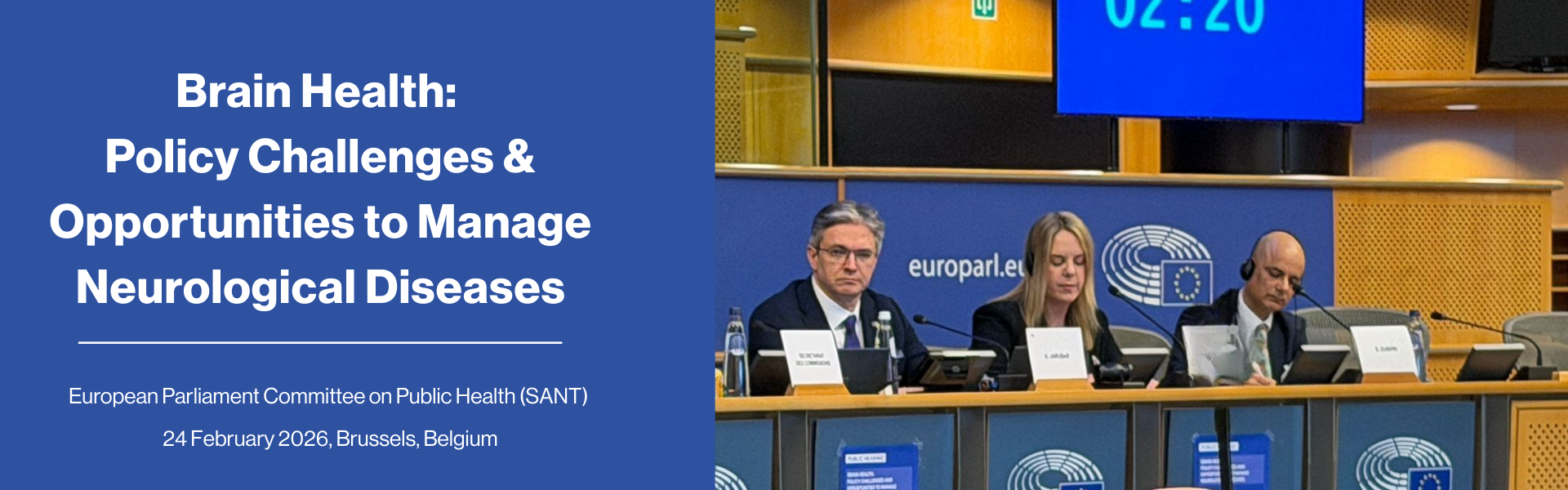
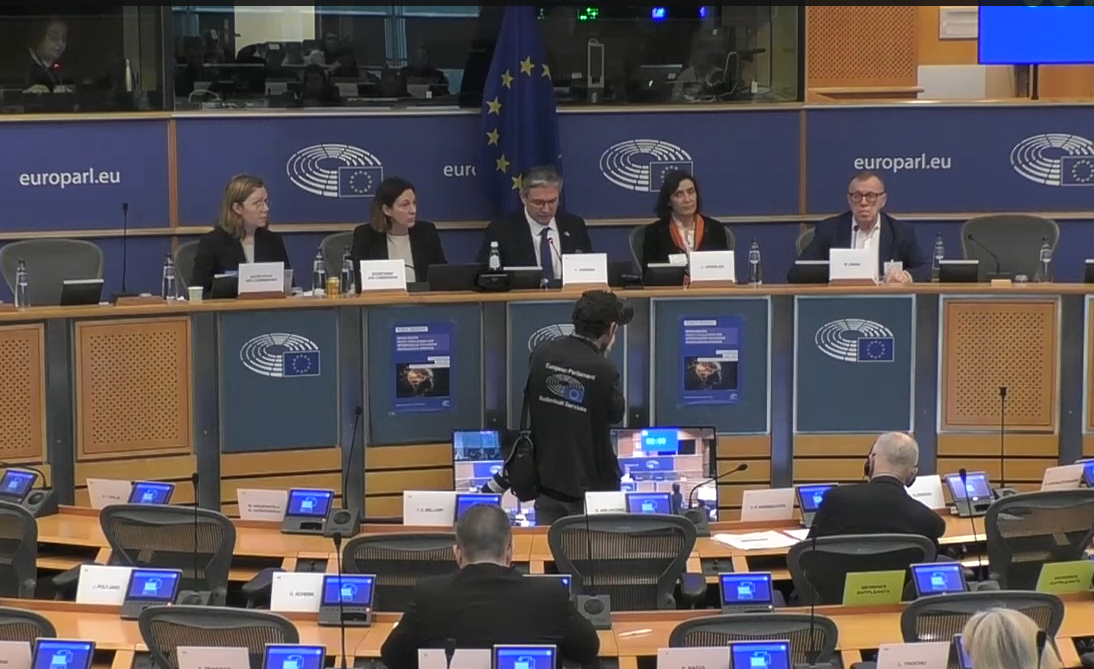
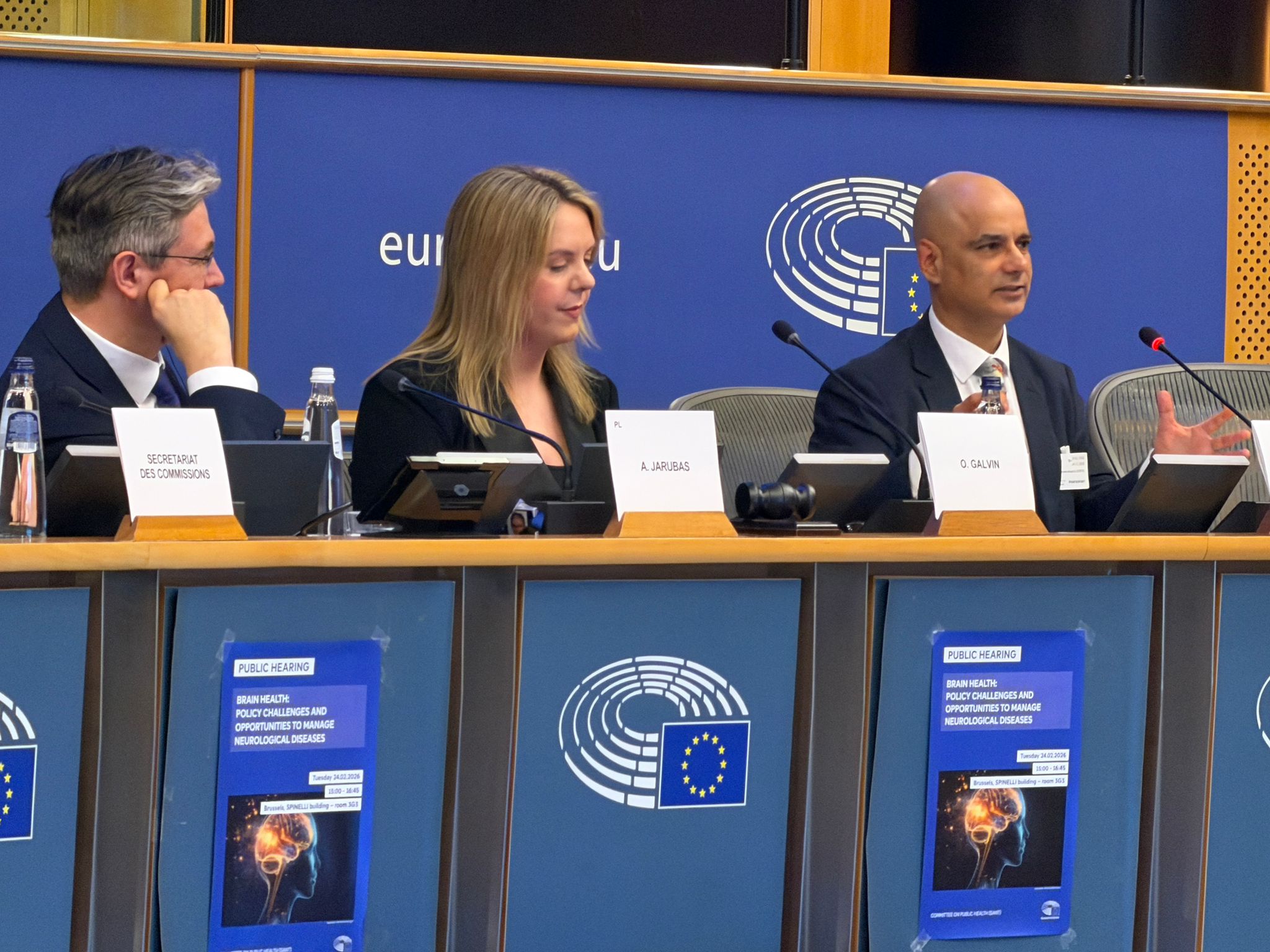
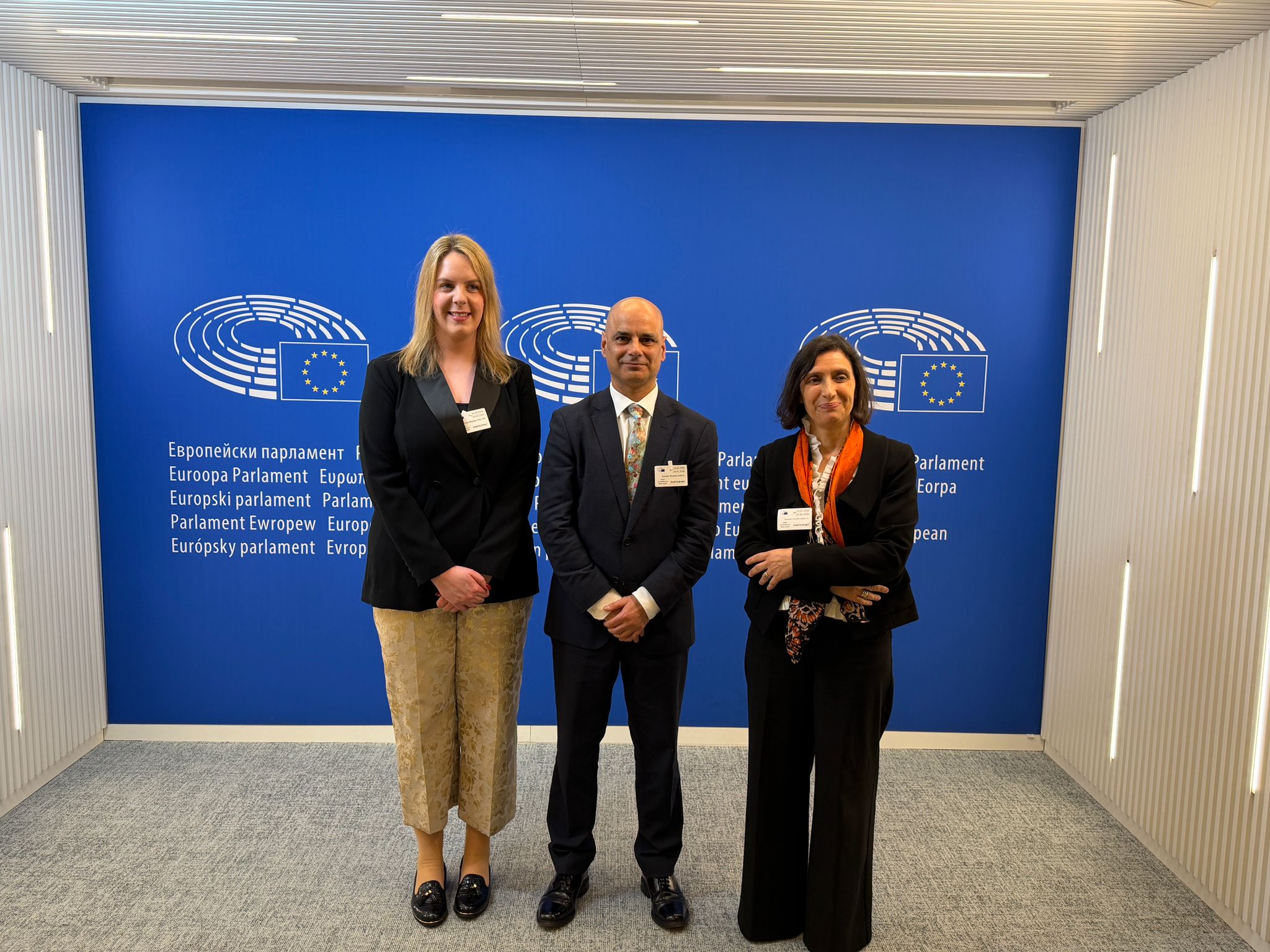
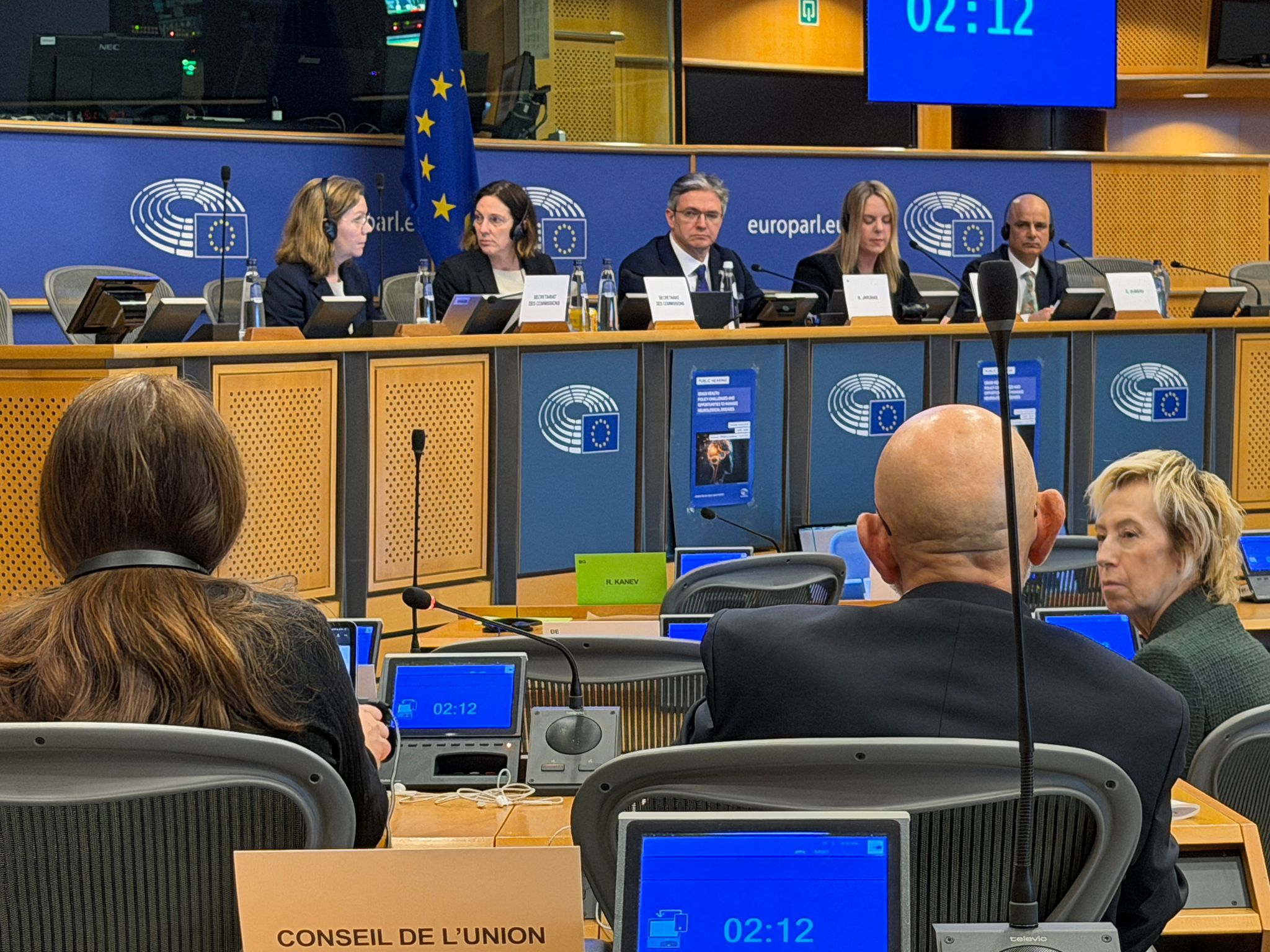
On 24 February 2026, the European Parliament Committee on Public Health (SANT) held a Public Hearing on ‘Brain health: Policy challenges and opportunities to manage neurological diseases’. The European Brain Council (EBC) was pleased to be invited to take part in this essential discussion through the contribution of its President-Elect, Professor Sameer Zuberi, as well as Board Member and Executive Director of the European Federation of Neurological Associations, Dr. Orla Galvin, strengthened only further by presentations from Professor Ana Verdelho and Professor Mirosław Ząbek.
Watch the Full Recording
The Hearing began with a presentation of a briefing commissioned by the Policy Department of Directorate for Transformation, Innovation and Health, European Parliament, focused on ‘Strengthening Brain health: Policy Recommendations to Tackle the Rising Burden of Neurological Diseases’. This briefing provided deeper context and insight for MEPs to understand the current state of brain health in the EU, particularly in terms of burden of disease, ongoing policy challenges as well as recommendations for how best to improve and build from the status quo. This helped set the scene and provide insight for why the Hearing is incredibly timely and needed.
Moving into the first Panel and Q&A session, invited experts Mirosław Ząbek (Professor, Head of the Neurosurgery Clinic at Mazowiecki Bródnowski Hospital, Warsaw) and Ana Verdelho (Professor, Associate Professor of Neurology at the School of Medicine, University of Lisbon) spoke on the Successes and challenges of cutting-edge research on neurology and the potential of neurotechnology.
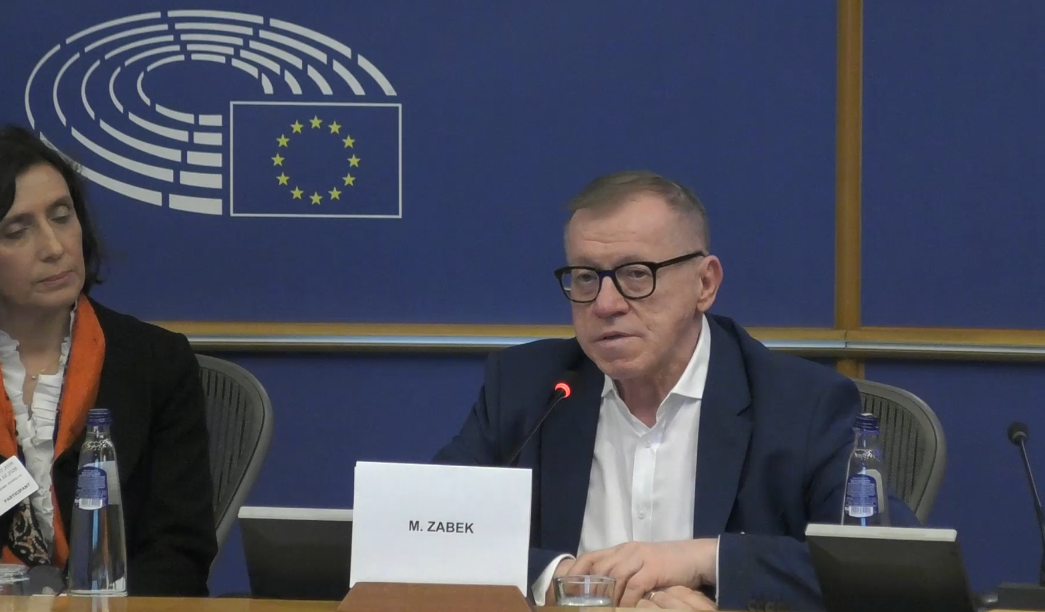
“I think that gene therapy is really the future in medicine, not only in neurosurgery but also in other specialisations” – Professor Mirosław Ząbek, Head of the Neurosurgery Clinic at Mazowiecki Bródnowski Hospital in Warsaw
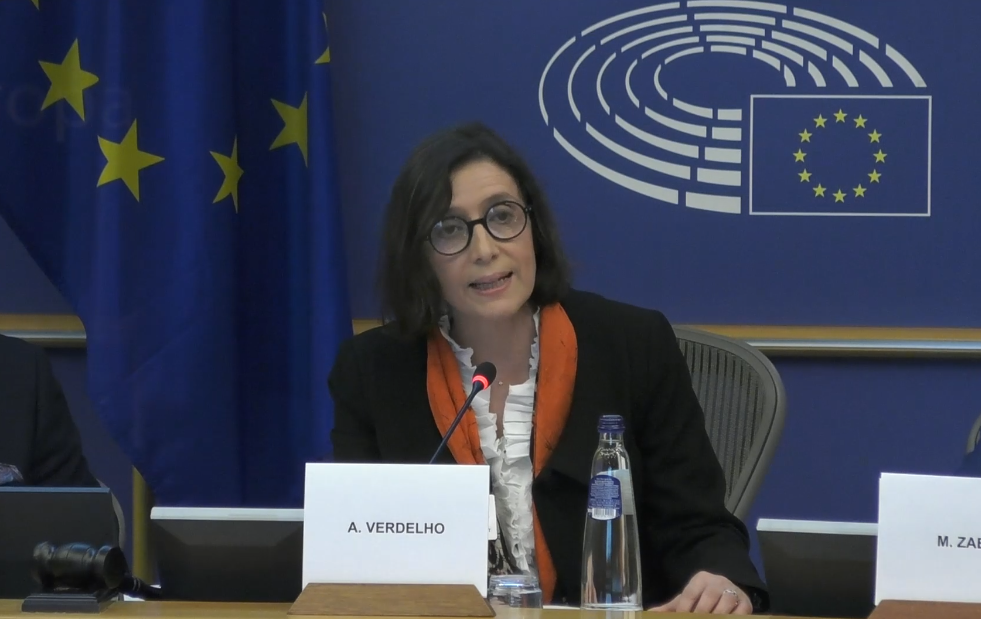
“We need citizens to be involved and empowered by the understanding that they can also be active in preventing neurodegenerative disorders”. – Professor Ana Verdelho, Associate Professor of Neurology at the School of Medicine, University of Lisbon
Prof. Verdelho started by reminding the audience of the clear need to improve prevention and early intervention for neurological disorders, demonstrating the tangible improvements in the prevalence and incidence of neurological disorders when such policies are in place. The EU should also ensure rigorous, clear and ethical research designs, and improve the training of GPs on neurological health and neurological disorders. Citizens need to be empowered to become actors and active participants in prevention strategies: “Any type of (policy) action needs to be transversal and must be multimodal — and we need citizens to be involved and empowered by the understanding that they can also be active in preventing neurodegenerative disorders“. Prof. Ząbek then took the floor to demonstrate that EU investment in research and clinical infrastructures yield very concrete results, by sharing the experience of a young patient having benefited from gene therapy: “I think that gene therapy is really the future in medicine, not only in neurosurgery but also in other specialisations“.
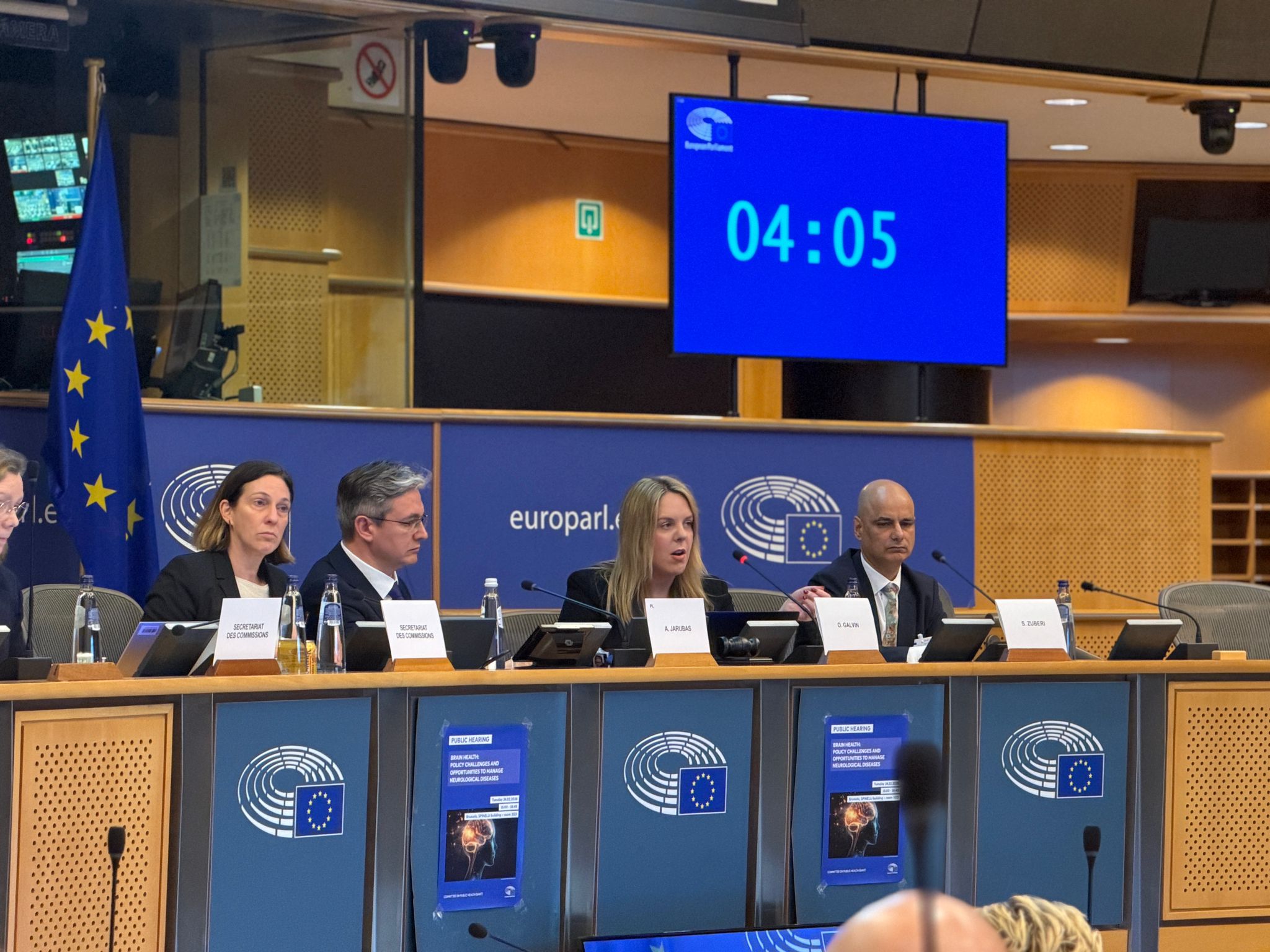
EBC President-Elect, Professor Sameer Zuberi, and Board Member and Executive Director of the European Federation of Neurological Associations, Dr. Orla Galvin, followed in the second panel of the Hearing, focused on European collaboration on neurological health, particularly in the field of dementia and other neurodegenerative diseases. They highlighted the urgency that the European Union adopts an overarching and collaborative approach to tackle the growing burden of neurological disorders, which affect more than one in three European citizens. Dr. Galvin reminded the audience that symptoms associated with neurological conditions can often be invisible, making it even more urgent to make people with lived experience equal partners in prevention, care, research and policymaking: “for a European Strategy to be effective for people living with neurological conditions, it must include their insights and expertise. Neurological health requires an integrated life course based approach and not siloed specialities.”
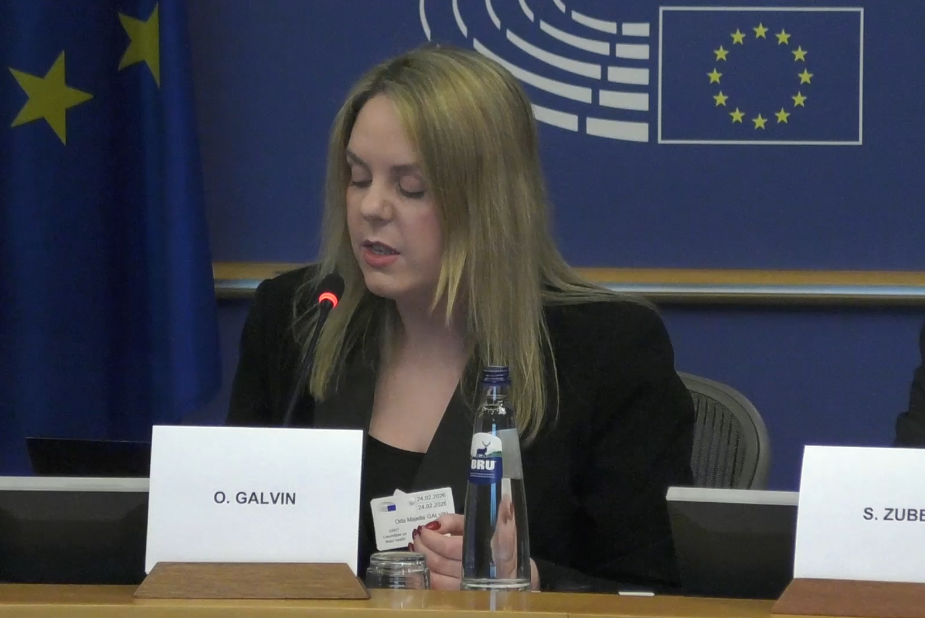
“Neurological health requires an integrated life course based approach and not siloed specialities.” – Orla Galvin, Executive Director, European Federation of Neurological Associations (EFNA); Board Member, European Brain Council (EBC)
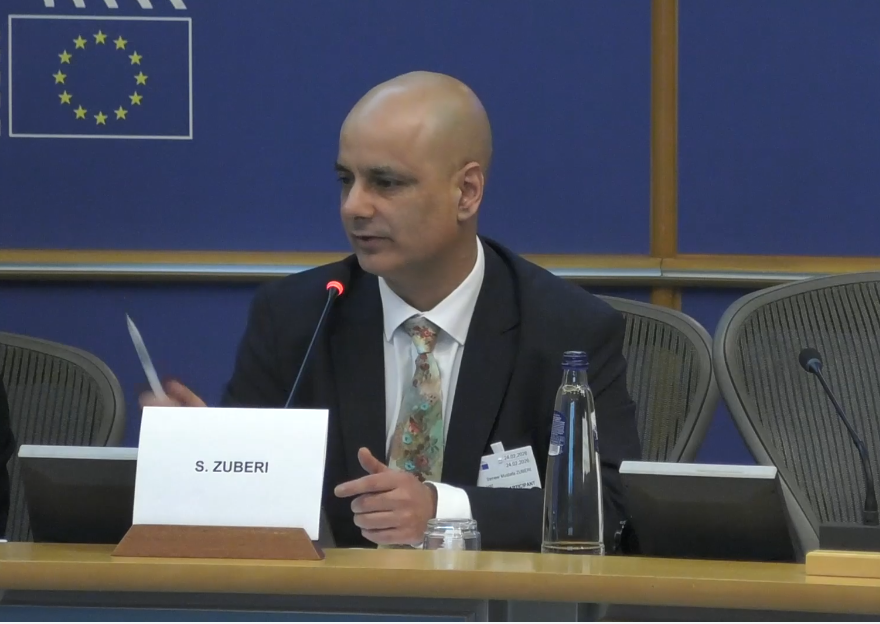
“There is a significant policy overlap between mental health and neurological disease – and the EU has the scale to make a tangible impact”. – Professor Sameer Zuberi, President-Elect of the European Brain Council
Prof. Zuberi then addressed the misconception that neurological disorders only affect older citizens. Most of brain disorders, neurological and mental alike, actually start in early childhood. This means that prevention strategies are essential and must go beyond traditional approaches, by tackling education, socialization, and many more determinants across the entire life course. Brain health is a key driver of competitiveness, leadership in technology and life sciences, resilience and productivity. Neurological disorders have a crucial interplay with many other conditions, notably mental health disorders and rare diseases, requiring overarching approaches and coordination mechanisms to better tackle them. “Neurological health and mental health must be united. They are two sides of the same coin.” urged MEP Vytenis Andriukaitis.
Throughout the public hearing, Members of the European Parliament showed strong willingness and commitment to acting on the burden of brain disorders, neurological and mental alike. They asked panellists how the EU could step up its approach of brain health and neurological disorders, while maximizing the impact of existing initiatives such as the European Partnership for Brain Health.
A lively discussion followed on the challenges associated with bringing innovation from the lab to the market, the needs for researchers to use all methods at their disposal to tackle the immense complexity of the human brain, or the importance of ensuring that this innovation can reach those who need it the most across the entire European Union. “It is now clear that we need to keep neurological health high on the EU agenda” concluded MEP Adam Jarubas, Chair of the Public Health Committee of the European Parliament.
Following the Exchange of Views session held by SANT in October 2024 [1], the growing attention from the European Parliament to brain health demonstrates the recognition of the urgency, timeliness and need to better tackle the staggering burden posed by brain disorders – neurological and mental alike. The emphasis placed on the need for increased coordination in the Briefing document [2] strongly echoes with the work spearheaded by the European Brain Council in drafting an EU Coordination Plan for the Brain. Actively involving its Member Organizations and partners, this Plan is dedicated to providing a cross-sectoral policy framework that aligns existing initiatives, reduces duplication, scales up best practices and maximizes impact across the brain health continuum.
Brain disorders, neurological and mental alike, represent one of the most pressing health challenges facing the European Union. At least one in three Europeans currently lives with a brain condition [3], with such disorders now the leading cause of disability and second leading cause of death worldwide. In Europe alone, they impose an annual economic burden estimated to range between €800 billion [4] and €1.3 trillion [5], a figure set to rise as the population ages [6]. While recent strides have been made in improving the understanding of the brain, significant limiting factors remain – prompting the need for increased prioritization and coordination across the EU.
In this context, the members of the European Brain Council – bringing together researchers, clinicians, patients, carers and industry partners – are actively working toward the development of such a Coordination Plan to support more coherent, efficient and strategic action across Europe. The hearing of the SANT Committee represented an important milestone in this process and, we hope, the beginning of a sustained and coordinated European approach that recognizes brain health as a strategic priority for the Union’s resilience, competitiveness and societal well-being.
Sources
- EBC Invited to Address the European Parliament Public Health Committee, European Brain Council.
- Strengthening Brain Health: Policy Recommendations to Tackle the Rising Burden of Neurological Diseases, Briefing Document Requested by the SANT Committee, PE 780.418 – February 2026.
- Economic Burden of Neurological diseases in Europe, European Academy of Neurology.
- J. Olesen et al., The economic cost of brain disorders in Europe, European Journal of Neurology 2012, 19: 155–162.
- Economic Burden of Neurological diseases in Europe, European Academy of Neurology.
- The Hidden Depths of Neurological Disease, Politico.