


EBC at the 34th European Congress of Psychiatry


The European Brain Council (EBC) was proud to participate in the 34th European Congress of Psychiatry, organised by the European Psychiatric Association (EPA) and held at the Prague Congress Centre from 28 to 31 March 2026. Gathering thousands of mental health professionals, researchers, policymakers and patient advocates from across Europe and beyond, the Congress convened under the theme “Mental Health: Improving Care and Expanding Horizons” — a call to action that resonated deeply with EBC’s own mission to improve care pathways for people living with brain disorders, mental and neurological alike.
Throughout all four days of the congress, participants were engaged in interdisciplinary exchanges and the kind of collaborative spirit that only a gathering of this scale can generate. From cutting-edge research presentations to policy-focused roundtables, the programme offered something for every strand of the mental health community. The diversity of perspectives on display — clinicians, neuroscientists, lived-experience experts, carers, and advocates — made this congress especially rich and inspiring.
EBC contributed actively to this agenda through four key sessions and a dedicated exhibition booth, reinforcing its role as a bridge between neuroscience, clinical practice and European health policy.
12th EPA Forum | Saturday 28 March
Fostering Whole-Person Mental Health through Integrated Care
The congress opened on Saturday morning with the 12th EPA Forum, an extended roundtable dedicated to one of the most pressing challenges in contemporary psychiatry: the imperative to treat the whole person, not just the diagnosis. EBC Executive Director Frédéric Destrebecq took part in this high-level discussion, contributing EBC’s perspective on why integrated, person-centred care must be the cornerstone of any serious mental health reform in Europe.
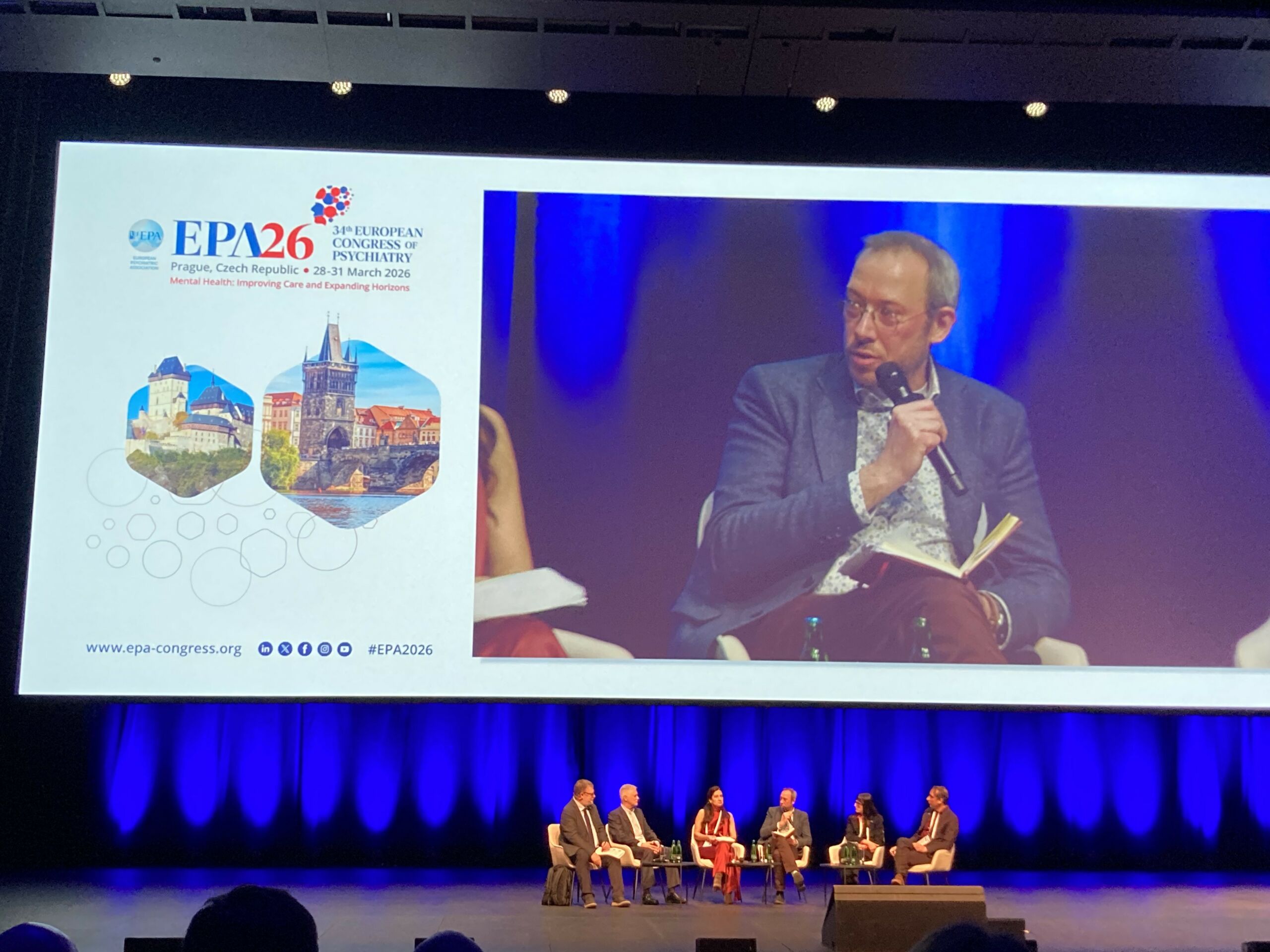

The discussion was energetic and forward-looking, with strong consensus emerging around the idea that ‘expanding horizons’ in mental health must begin with dismantling the silos that still characterise too much of European health systems. The conversation furthermore emphasised that Europe is not lacking innovation, but rather implementation strategies. Frédéric Destrebecq announced that the newly launched European Partnership for Brain Health will included calls dedicated to exactly that – implementation of innovative research findings into real-world impact!
The session brought together clinicians, policy voices and patient representatives to explore mental and brain health across the lifespan, the intersection of physical health and multimorbidity, the role of lifestyle and social determinants, and the persistent challenge of reducing the mortality gap for people living with serious mental illness. The Policy Forum set a tone of ambition and collaboration that carried through the rest of the congress.
“For too often we have been tricked about the separation between mental health and physical health […] and it is really at the core of the mission of EBC and the message we are conveying around a common brain health approach, reminding us that there is more bringing us together than separating the various disciplines we represent.”
 Frédéric Destrebecq, EBC Executive Director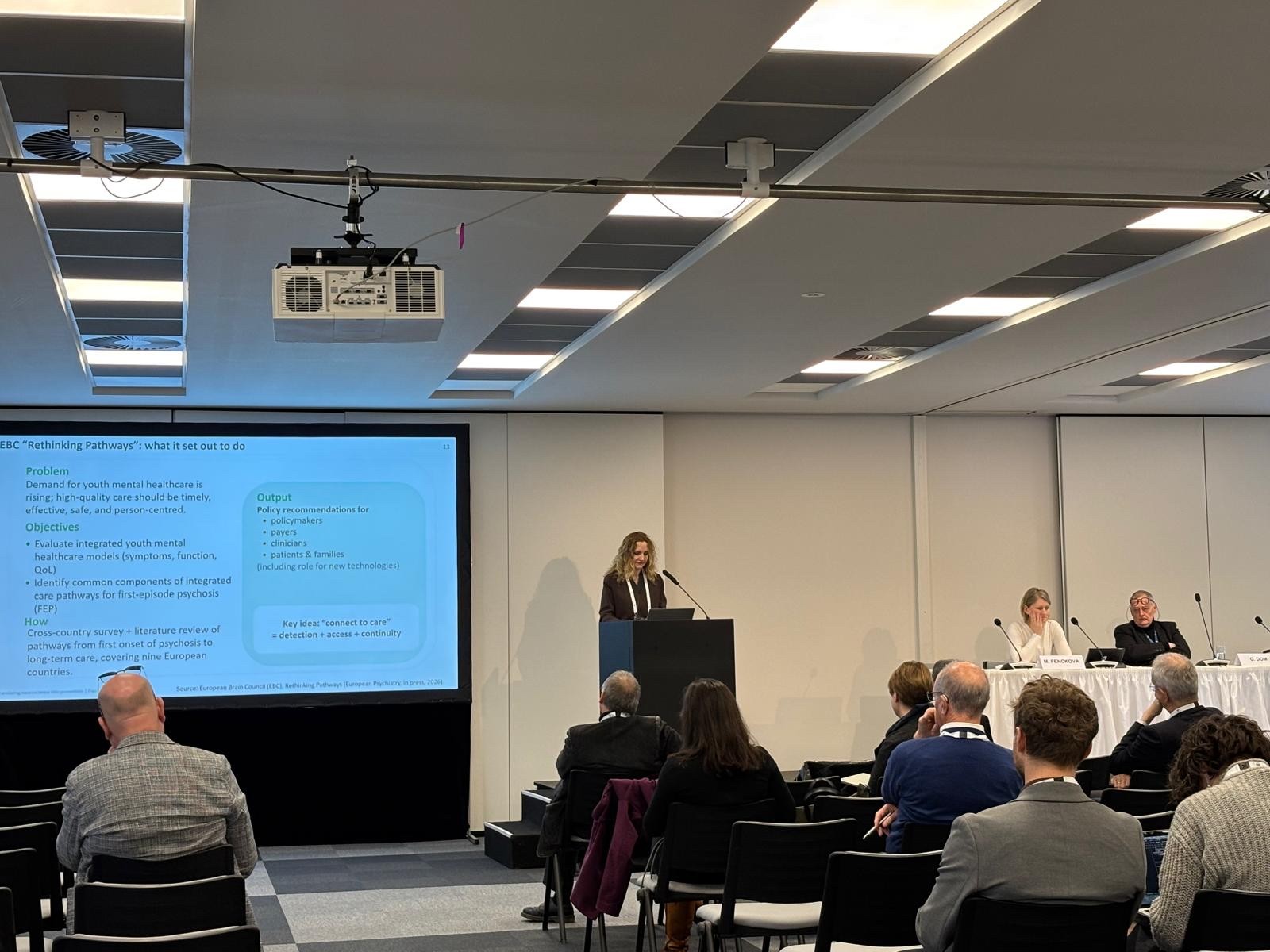
Joint Symposium FENS–EBC | Sunday 29 March
The Neuroscience of Prevention: Early Intervention Strategies for Mental Health
Sunday morning opened with the joint symposium between the Federation of European Neuroscience Societies (FENS) and EBC, dedicated to the neuroscience of prevention and early intervention. EBC President Suzanne L. Dickson delivered a keynote presentation on translating neuroscience into prevention — making the compelling case for building brain health-oriented early intervention pathways in Europe, with a particular focus on psychosis and schizophrenia.
EBC President Suzanne Dickson’s presentation drew on the growing body of evidence linking early biological and psychological markers to psychosis onset, and challenged the audience to think about what it would mean to truly invest in prevention — not just in the clinical sense, but as a political and systemic commitment. Schizophrenia, she argued, is not simply a late-stage psychiatric syndrome — its most damaging consequences (cognitive impairment, loss of function, physical comorbidity, social exclusion) accumulate early, during a high-plasticity window in late adolescence and early adulthood when brain development is still ongoing. This biological reality, she emphasised, is both the challenge and the opportunity: “The brain is still malleable — but only if services can act before disability consolidates.” She spoke to the power of a brain health framing: by understanding schizophrenia and related conditions through the lens of brain development and neurobiology, clinicians, researchers and policymakers can make far more targeted, evidence-based decisions about where to intervene and when.
“The thread is simple: prevention works when we design systems that shorten time-to-care and protect brain health outcomes—not only symptom scores.”
 Suzanne Dickson, EBC President
The auditorium was well-attended, and the exchange that followed the presentations was lively and substantive. The collaboration between FENS and EBC was itself a statement: neuroscience and psychiatry, for too long operating in parallel, have much to gain from working in close, structured alignment. This joint symposium embodied exactly the kind of ‘expanding horizons’ the congress theme called for.



Joint Symposium APA–WPA | Sunday 29 March
Rethinking Schizophrenia: From Evidence to Policy Action
Sunday afternoon brought another significant moment for EBC, with the presentation of the Rethinking Schizophrenia project in the joint symposium co-organised by the American Psychiatric Association (APA) and the World Psychiatric Association (WPA). Pavel Mohr, Head of the Clinical Department at the National Institute of Mental Health and a key collaborator on the project, presented on EBC’s ongoing effort to rethink how schizophrenia care is structured, delivered and evaluated across Europe.
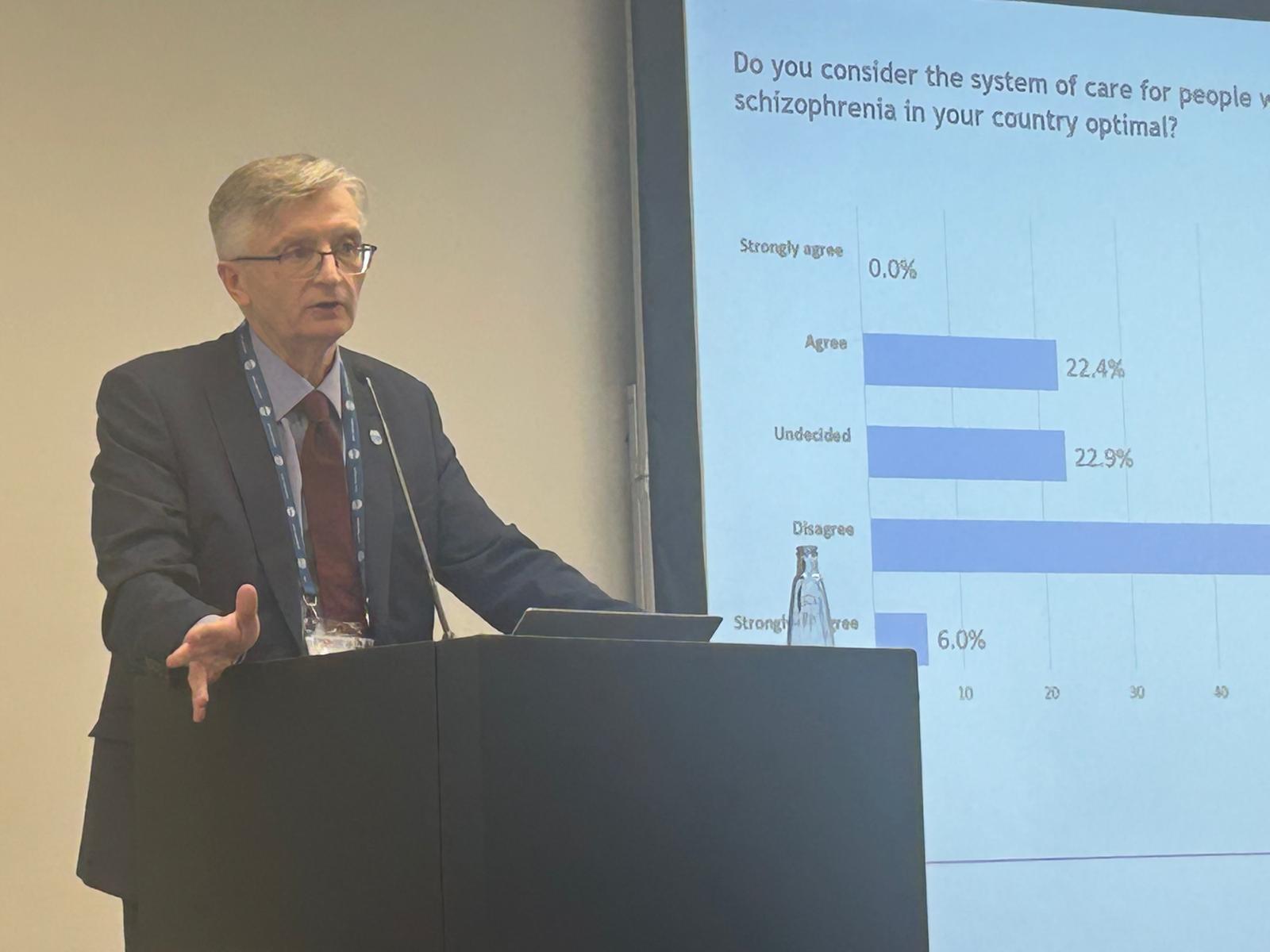
The Rethinking Schizophrenia project — a joint initiative between EBC and the EPA — aims to assess the health and societal benefits of improved interventions compared to current or inadequate care, and to translate data into actionable policy recommendations. This phase of the project builds on extensive fieldwork across nine European countries (Belgium, Denmark, France, Germany, Hungary, Italy, Poland, Spain, and the United Kingdom), drawing on insights gathered from over 200 health practitioners to map patient care pathways and identify systemic gaps.
The APA-WPA setting gave the project important visibility on a truly global stage. The results, which highlight the urgent need for more coordinated, multidisciplinary approaches to schizophrenia care, prompted a rich discussion about the challenges of translating research into reform — and about the role of international organisations such as EBC in bridging that gap. The conversation in the room confirmed what EBC has long argued: that schizophrenia remains a condition where the distance between what we know and what we do is far too wide, and where the human and economic cost of inaction is simply too high.
E-Poster Presentation | Monday 30 March
Rethinking Schizophrenia Care in Europe: A Brain Health Approach to Early Intervention and System Reform
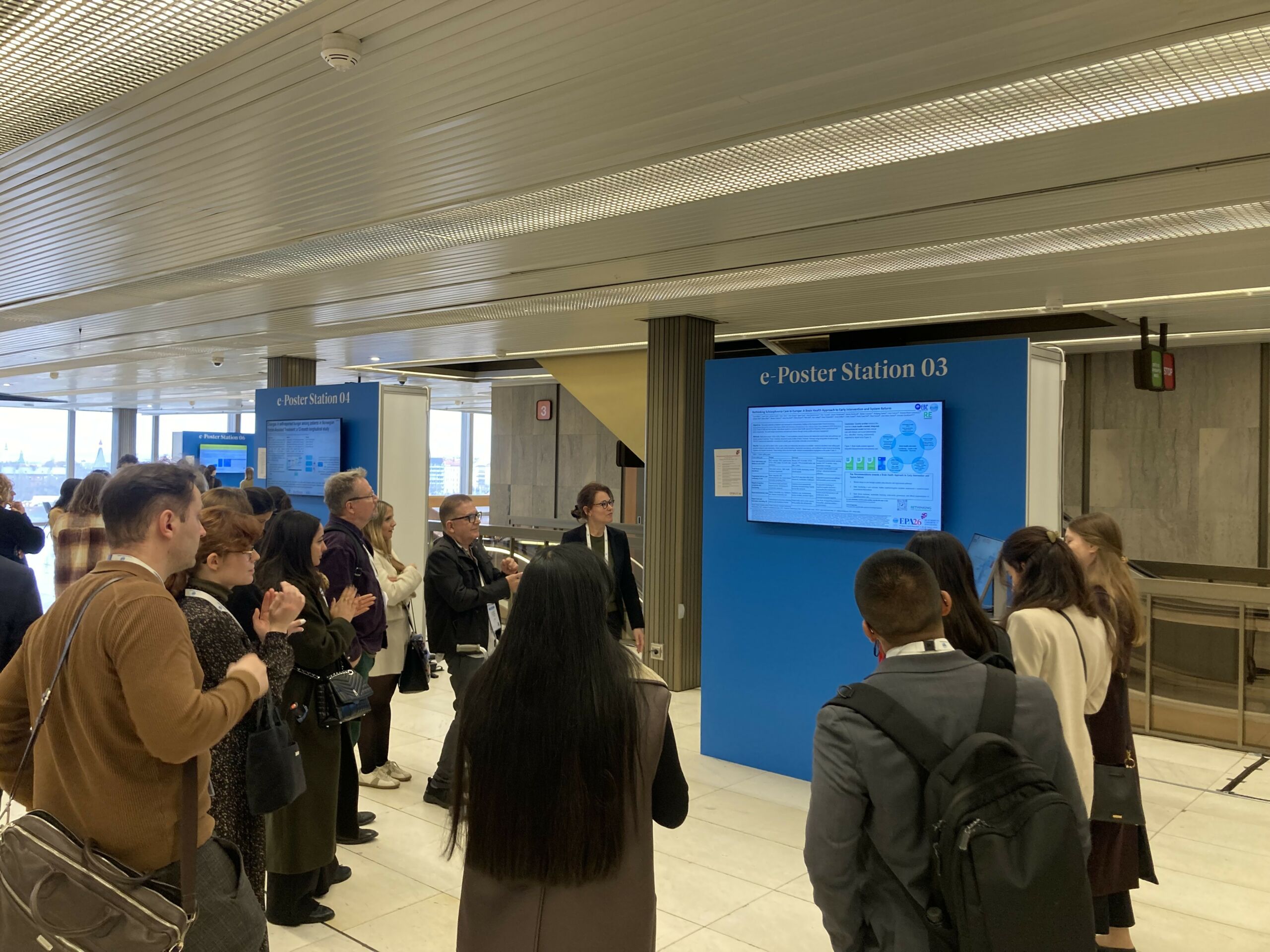
On Monday, EBC’s Research Project Manager Vinciane Quoidbach presented an e-poster on the Rethinking Schizophrenia project. The poster, co-authored with Pavel Mohr, focused specifically on Phase 3 of the project: the development of structured country profiles for Poland, Denmark and Germany, drawing on triangulation of national data sources and targeted stakeholder consultations to identify gaps and prioritise recommendations that are implementable within each health system’s specific context.
The presentation laid out a clear and sobering picture of the cross-cutting gaps identified across country profiles and stakeholder consultations conducted between June 2025 and March 2026: persistent delays from first symptoms to specialist assessment; fragmented care delivery with major discontinuities at key transitions, particularly from youth to adult services and from acute to community care; insufficient routine focus on functioning, cognition and negative symptoms despite these being key drivers of long-term disability; and limited systematic links to the social determinants — education, housing, employment — that are essential to real-world recovery. Success, the poster made clear, cannot be measured by symptom scores alone; outcomes that matter in real life — functioning, cognition, quality of life, physical health, engagement with services — must be built into pathway design from the outset.
Europe does not need to choose between neuroscience and implementation. The brain health lens is precisely what helps connect the two: it anchors early intervention around outcomes that matter and asks health systems to organise delivery through integrated pathways that reduce delay, improve continuity and address social determinants.
 Vinciane Quoidbach, EBC Research Project Manager
Recommendations clustered around three priorities: shortening delays to care through scalable early detection and rapid-access pathways; making functioning a core outcome rather than an afterthought, with routine assessment and targeted psychosocial support; and building reform readiness in health systems through sustainable financing, cross-sector governance, and the careful, equitable use of digital tools.
Engagement at the EBC booth
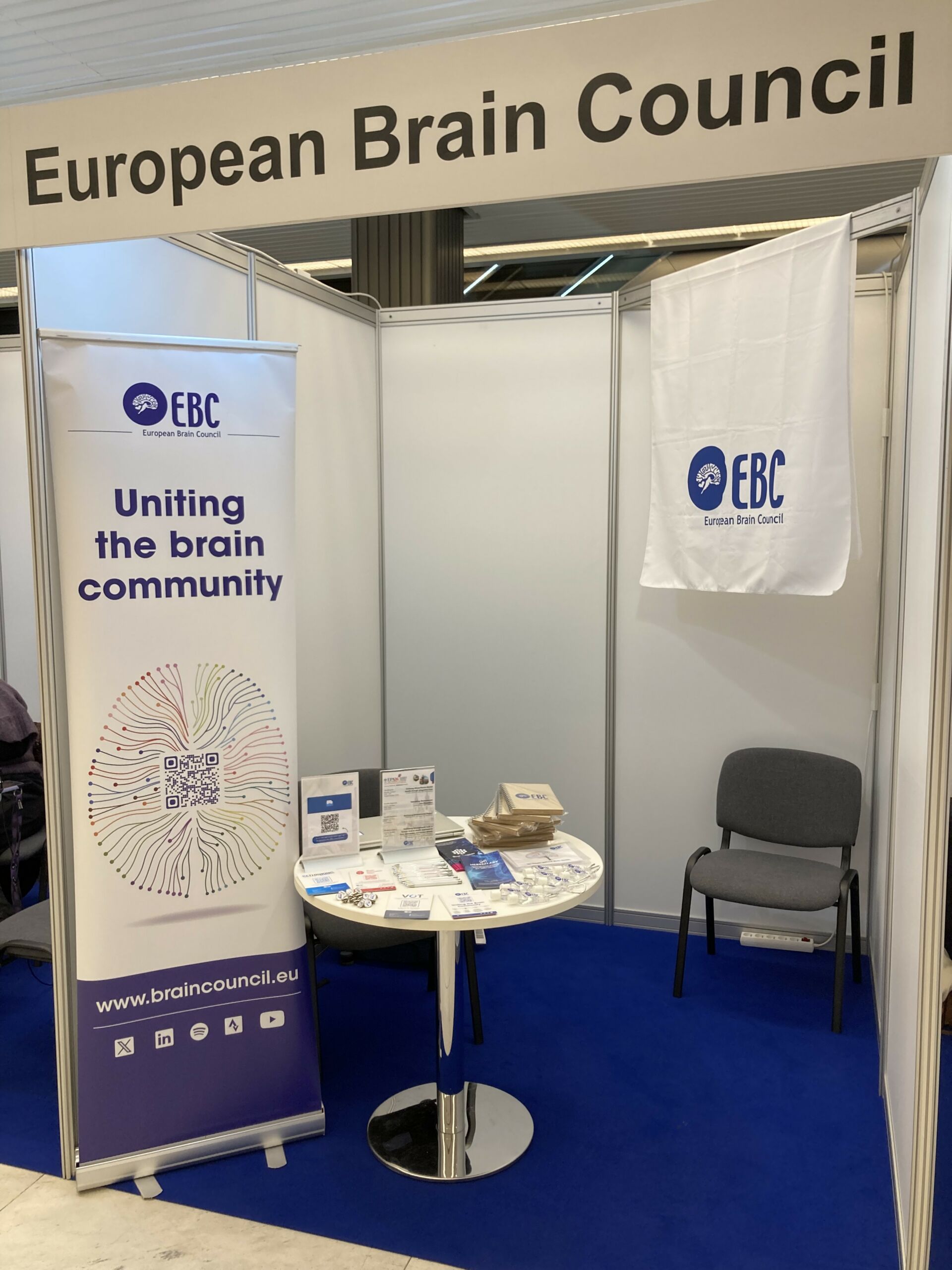
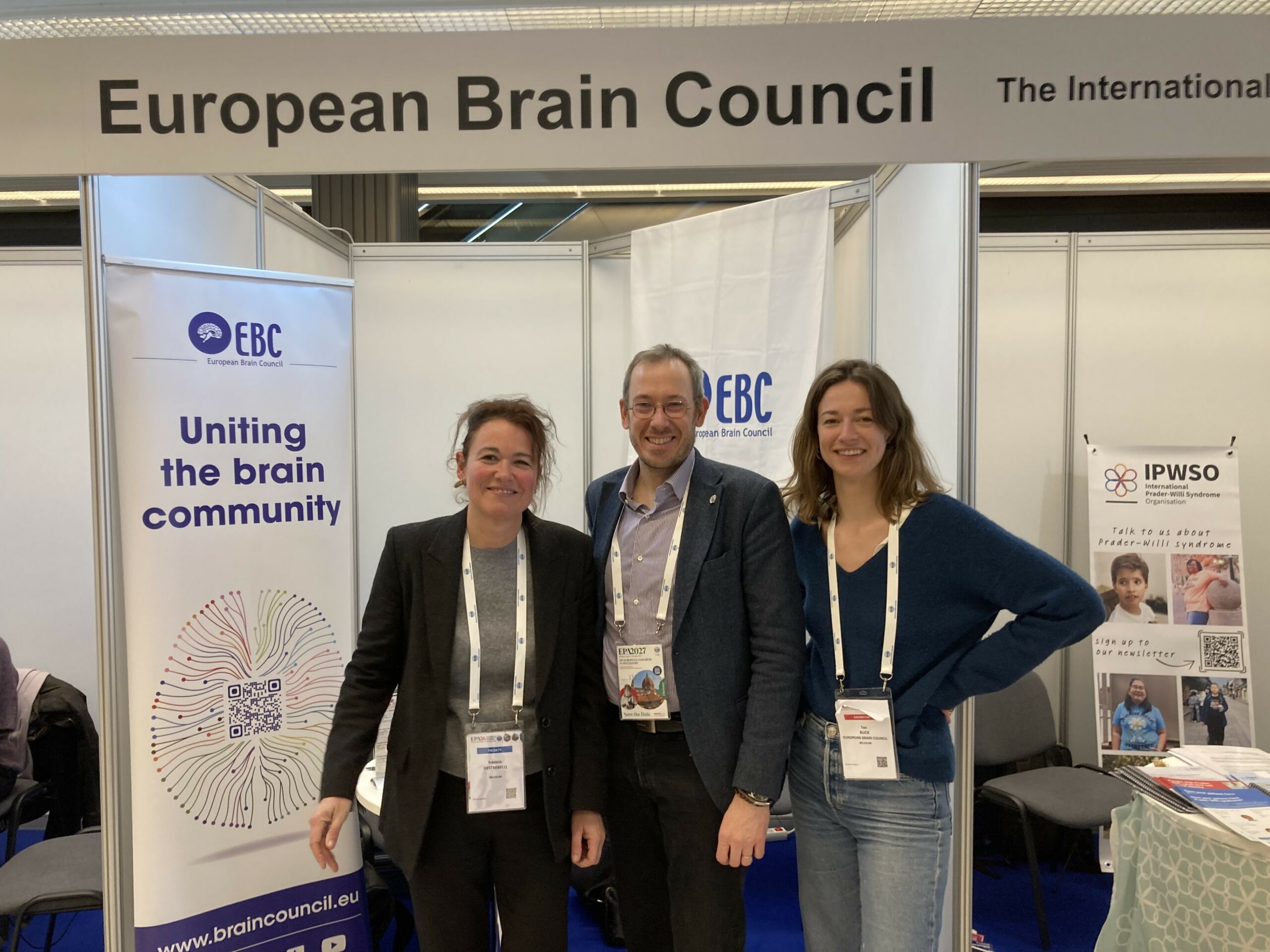
Throughout the congress, EBC maintained a lively and welcoming presence on the exhibition floor. The booth served as a meeting point for colleagues, partners and participants curious to learn more about EBC’s projects, campaigns and upcoming events. Delegates stopped by to continue conversations sparked in the conference halls, to pick up materials on the Rethinking Schizophrenia Project, the European Partnership for Brain Health, to explore opportunities for collaboration, or simply to learn about what the European Brain Council does on a day-to-day basis. The booth also served as a hub for reconnecting with long-standing EBC partners and member organisations, reinforcing the familiar and welcoming feeling that the EPA congress provides for EBC.
Not every encounter was straightforward, however — and some of the most valuable conversations at the booth were also the most revealing. A striking number of psychiatrists stopped by with little or no prior awareness of the European Brain Council: who we are, what we do, and crucially, why an organisation working at the policy level should matter to them in their day-to-day clinical practice. The question came up repeatedly, in different forms: “But how does any of this affect what happens in my clinic?” It was a candid reminder that the connection between European policy advocacy and healthcare delivery is far from self-evident to those working directly with patients.
These exchanges reminded us precisely why multistakeholder dialogue is not a nice-to-have but a strategic necessity. Policy does not exist in a vacuum: the decisions made at European and national level about funding, care standards, workforce, and system design translate — directly and often rapidly — into the structures that clinicians work within and the options available to their patients. When a European directive shapes a national mental health strategy, when a reimbursement decision determines which treatments are accessible, when a policy recommendation pushes for integrated care pathways, the effects trickle down to every consultation room and every patient interaction. These conversations reinforced EBC’s conviction that one of its most important roles is to be that bridge: making the policy-to-practice chain visible and legible to clinicians, and in turn ensuring that clinical realities and patient needs remain audible at the policy level.
Beyond the formal programme, the congress offered countless informal opportunities for exchange — over coffee, in the corridors, at side meetings — and EBC’s team made the most of every one.
Looking Ahead
The 34th European Congress of Psychiatry reaffirmed what EBC has always believed: that meaningful progress on mental health in Europe requires more than scientific excellence — it requires connection, collaboration and a willingness to think across boundaries. The congress theme, “Mental Health: Improving Care and Expanding Horizons”, was not merely a slogan but a lived reality across four days of engagement, debate and shared purpose.
We look forward to continuing these conversations, and to welcoming colleagues at future EBC events and initiatives. Thank you to the European Psychiatric Association, the session organisers, and all the delegates and visitors who made EPA 2026 such a memorable and productive congress.
taxation planning
Eiusmod tempor incididunt ipsum ut labore dolore magna aliqua. Ut enim minim veniam duisy ipsum sed quis.