

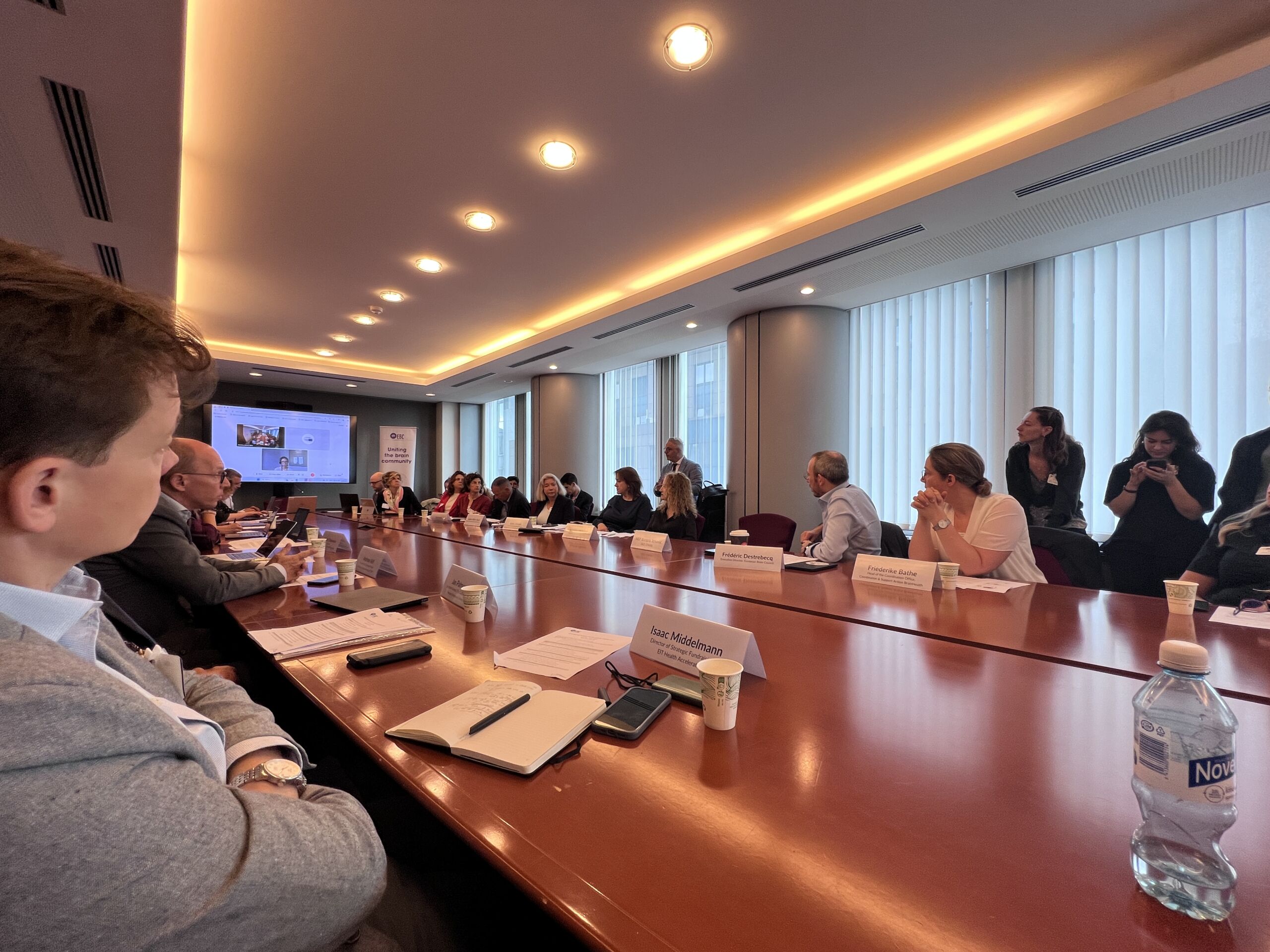
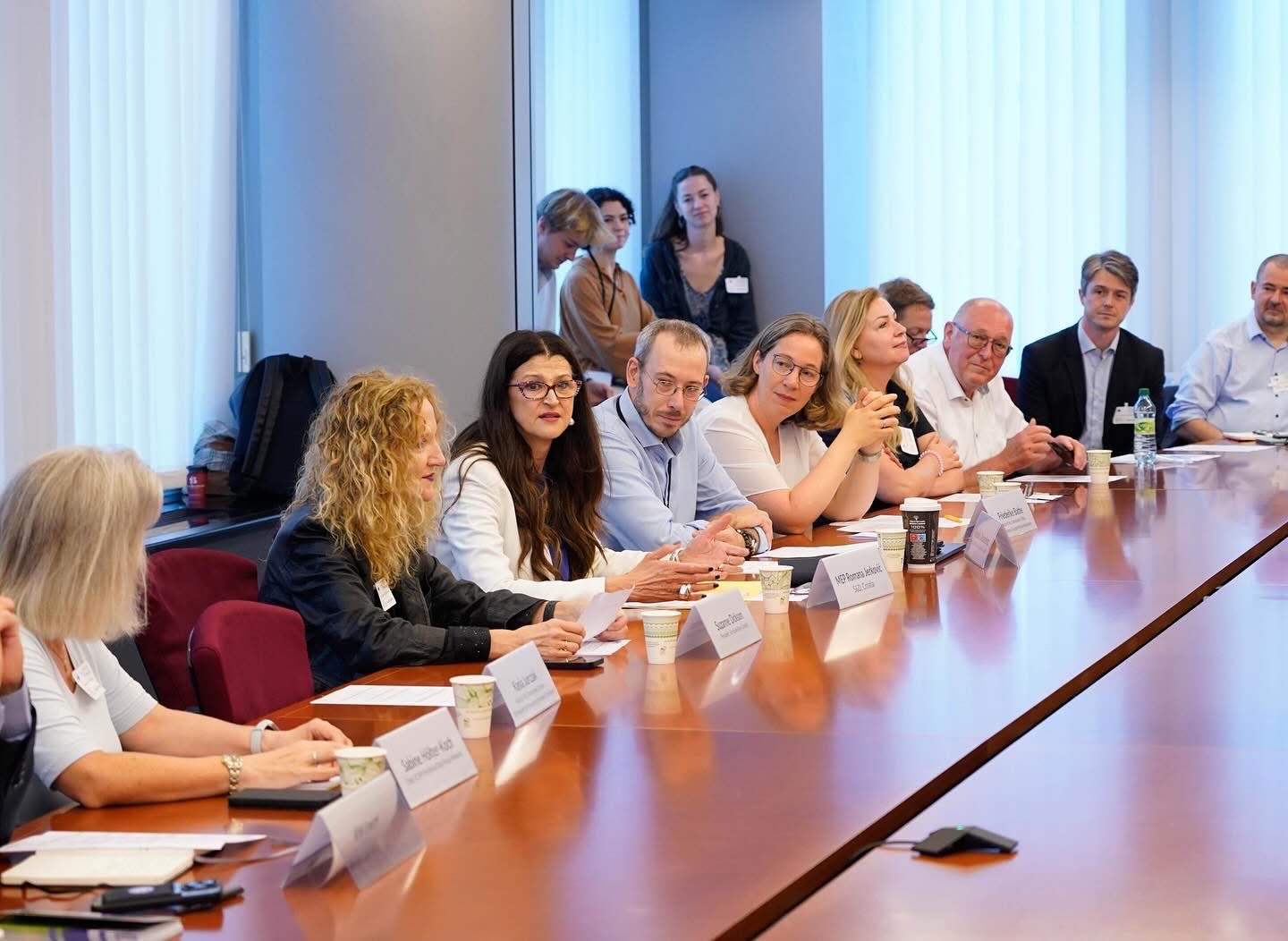
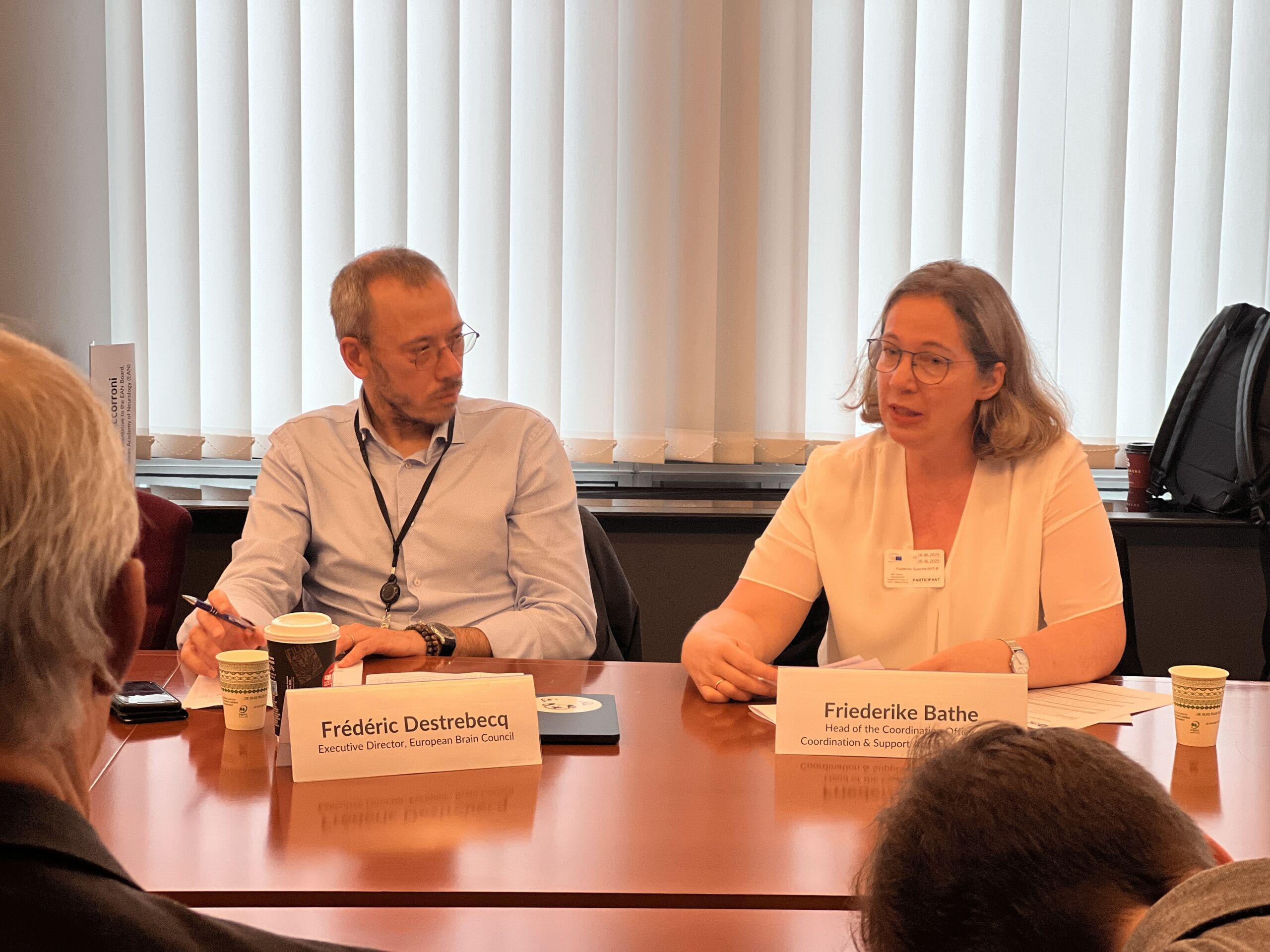
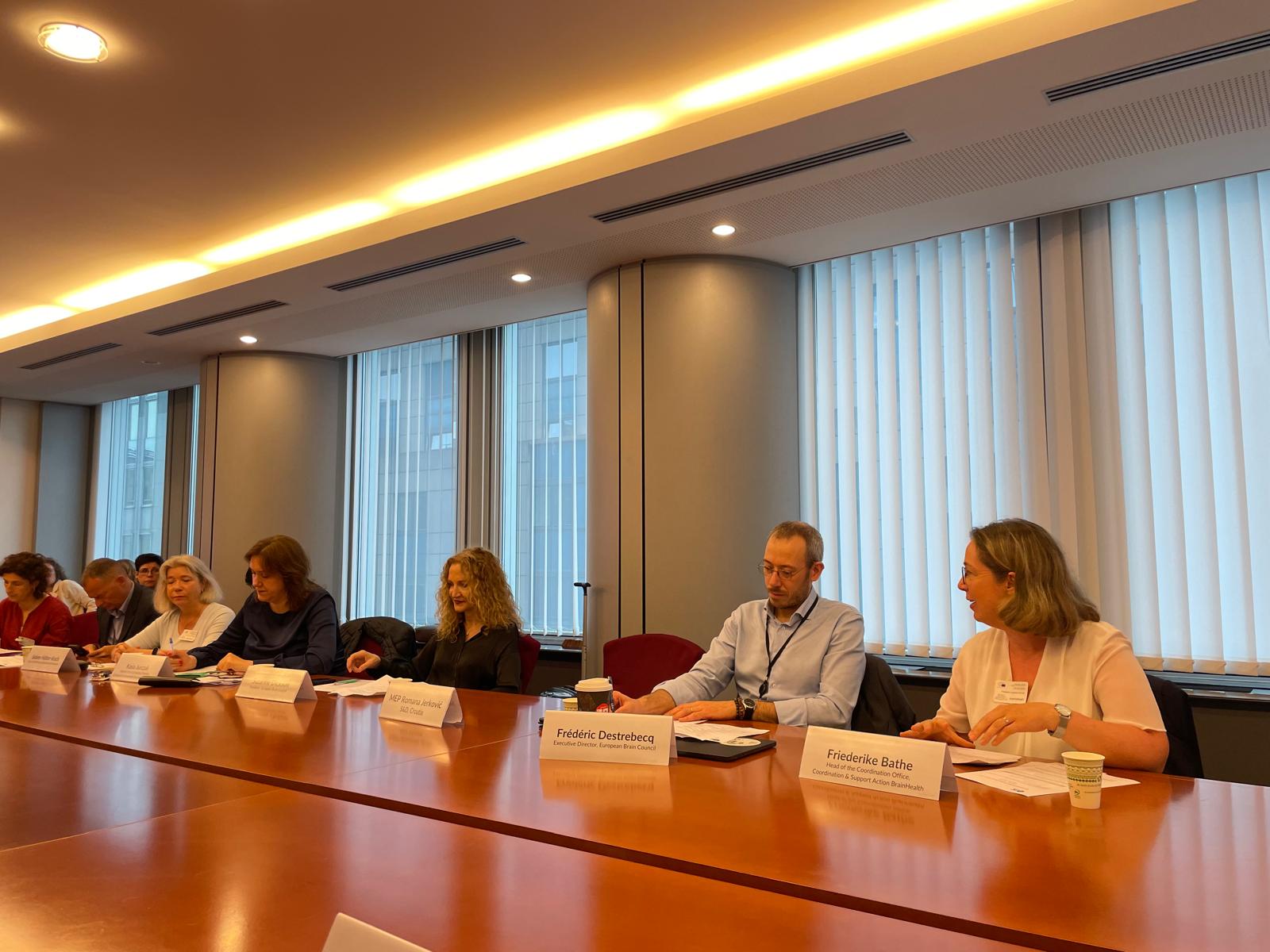
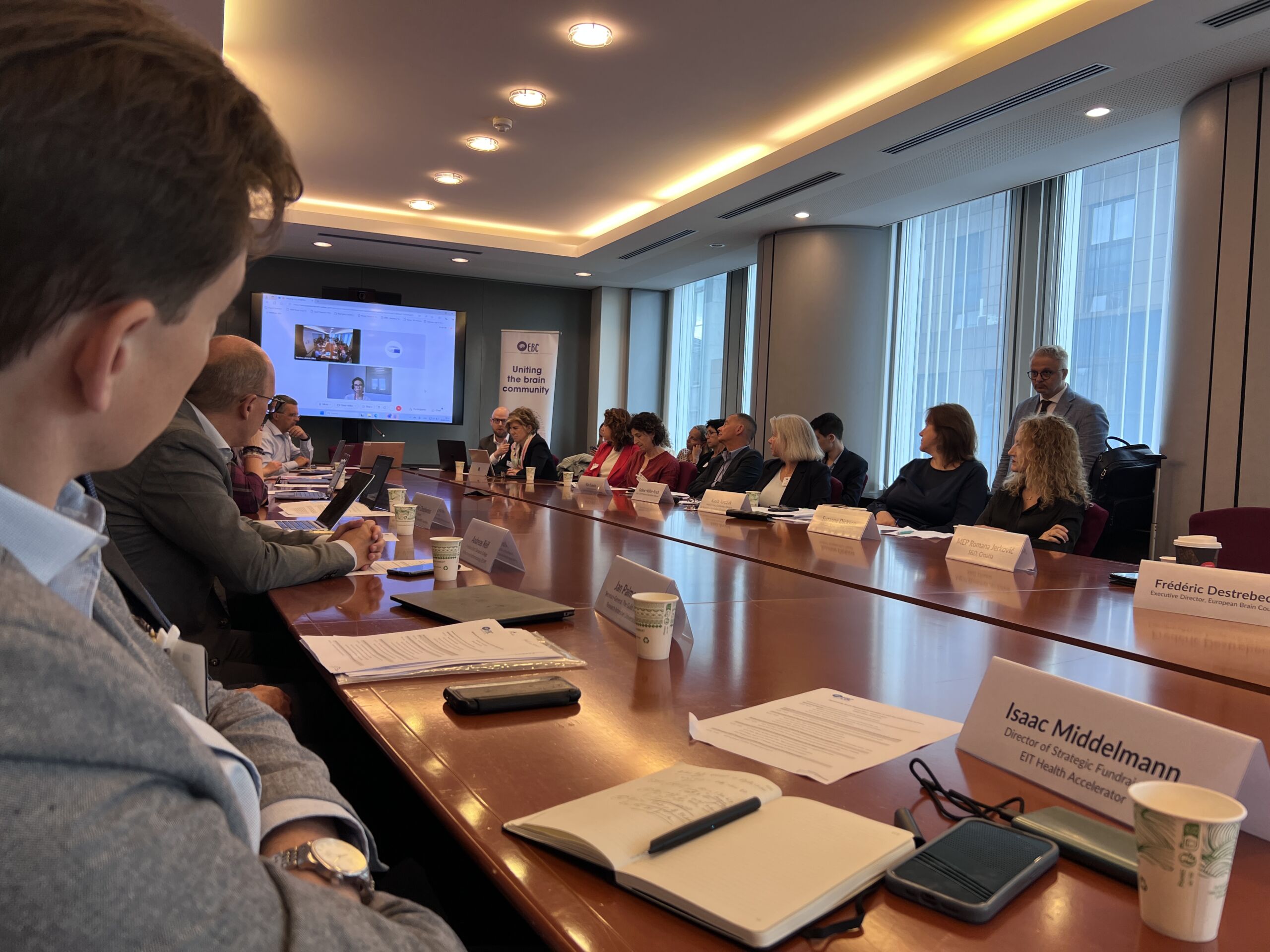
On 26 June 2025, the event titled “Advancing Brain Research in Europe: A Call for Collective Action” was held at the European Parliament in Brussels, hosted by Member of the European Parliament (MEP) Romana Jerković (S&D, Croatia) in collaboration with the European Brain Council (EBC). Moderated by Frédéric Destrebecq, Executive Director of EBC, the event brought together a broad community of researchers, policymakers, patient advocates, and industry leaders to advance the call for a unified European approach to brain health and research.
Aside from the event, a delegation of 21 researchers from across the European Union met with more than 40 MEPs and their staff to make the case for increased prioritisation of brain health and brain research in the upcoming policy files shaping the future of the EU’s research and innovation ecosystem. Coordinated by EBC and supported by Member Societies, these meetings and the accompanying event underscored the urgency of coordinated action to elevate brain health as a strategic pillar within the EU’s health and research agenda.

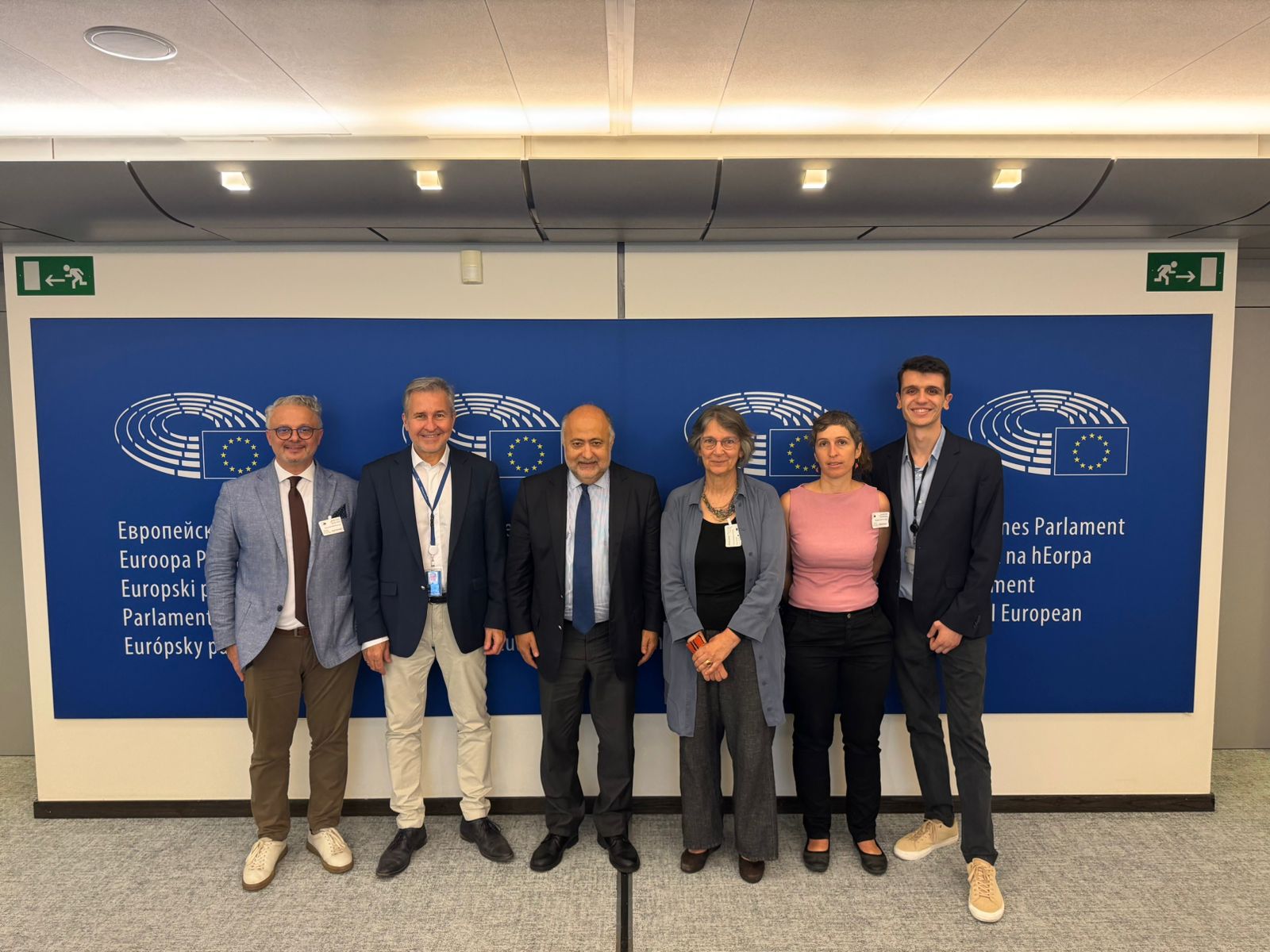
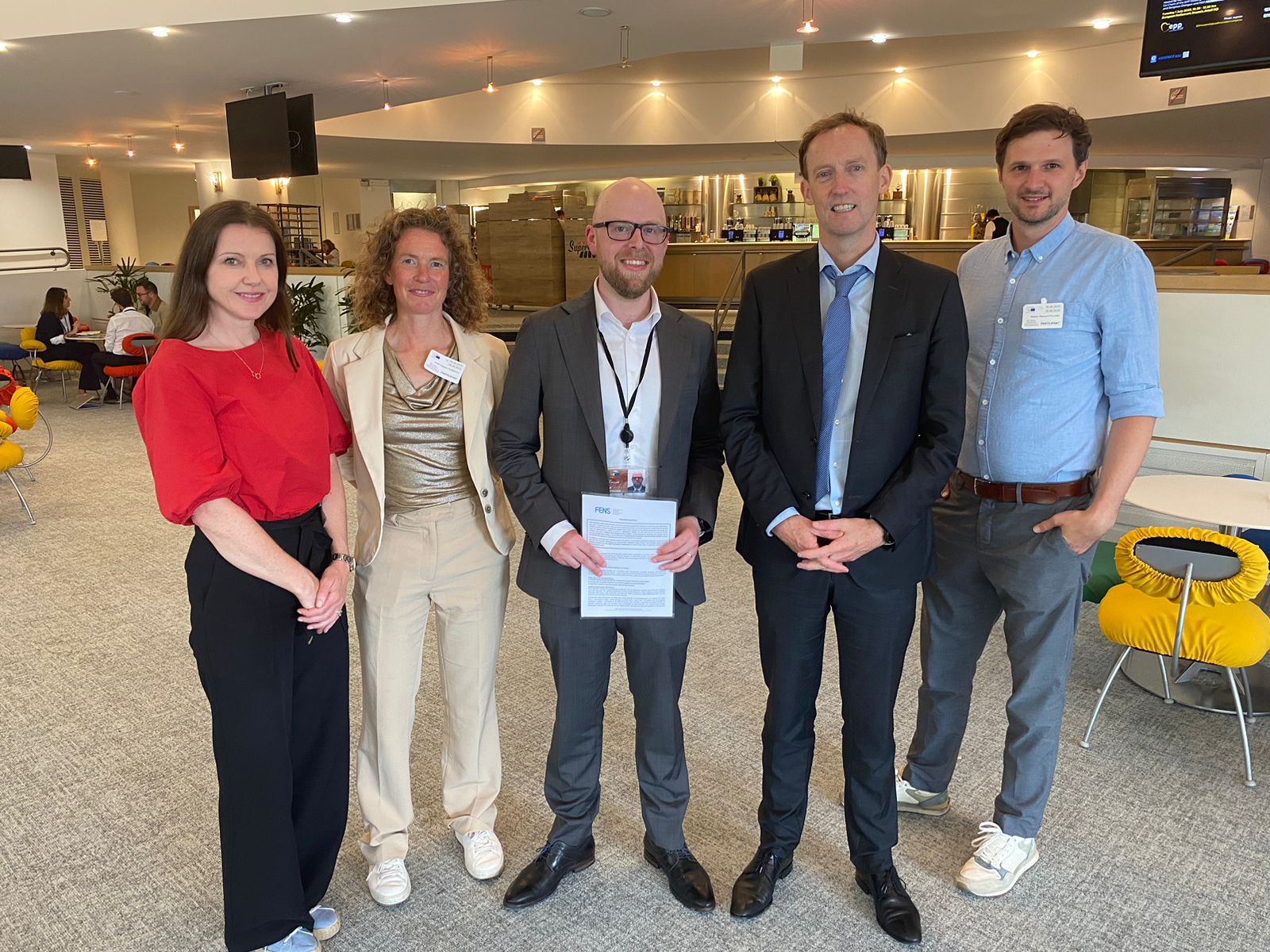
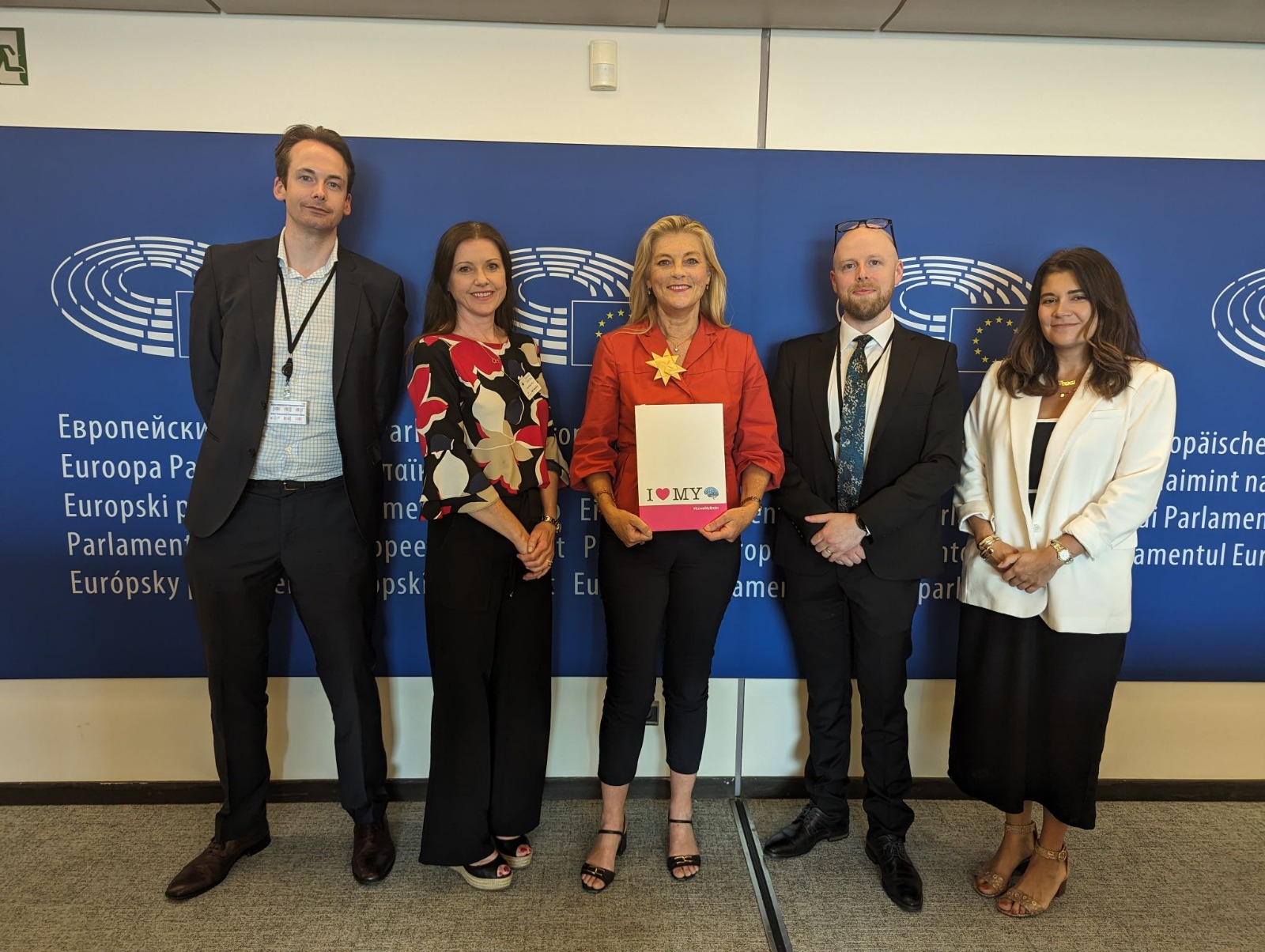
Political Leadership and Investment Commitment
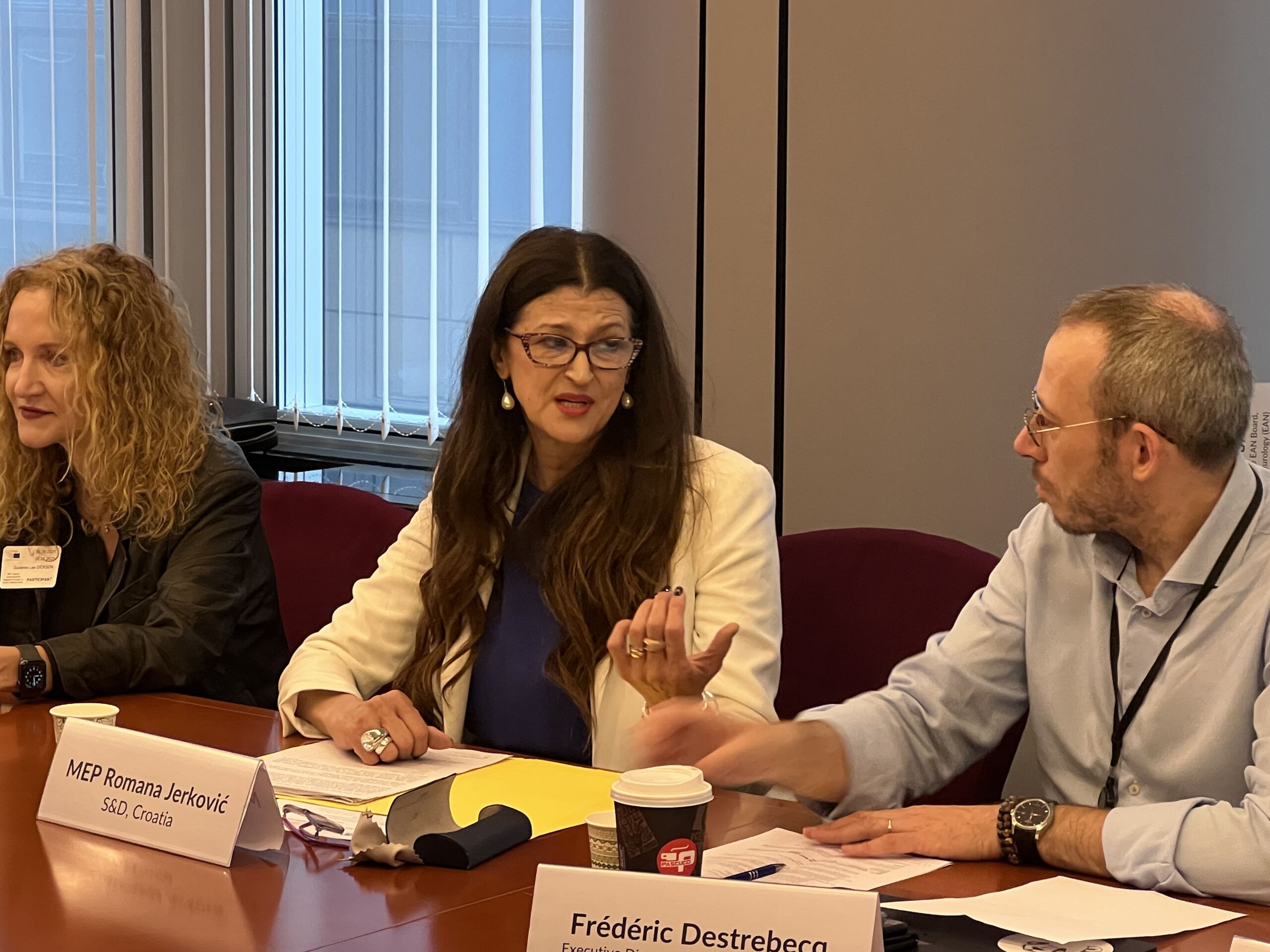
In her opening remarks, MEP Romana Jerković emphasised the essential role of science in shaping socioeconomic progress and the critical need to safeguard and elevate brain research in Europe. Referencing the reduced EU4Health budget and the broader pressure on scientific funding, she voiced a powerful reminder:
“There is no health without brain health. The brain is not just another organ; it is who we are.”
 MEP Romana Jerković, S&D, Croatia
She urged policymakers to view investment in neuroscience not as optional but as fundamental to the continent’s wellbeing and resilience.
Kasia Jurczak, Head of the Combatting Diseases Unit (RTD.D.1) at the European Commission’s Directorate-General for Research and Innovation, highlighted the Commission’s ongoing investment in brain and mental health research, noting that over €7 billion has been committed since 2014. She stressed the growing alignment of brain research with the EU’s competitiveness agenda, beyond just public health.
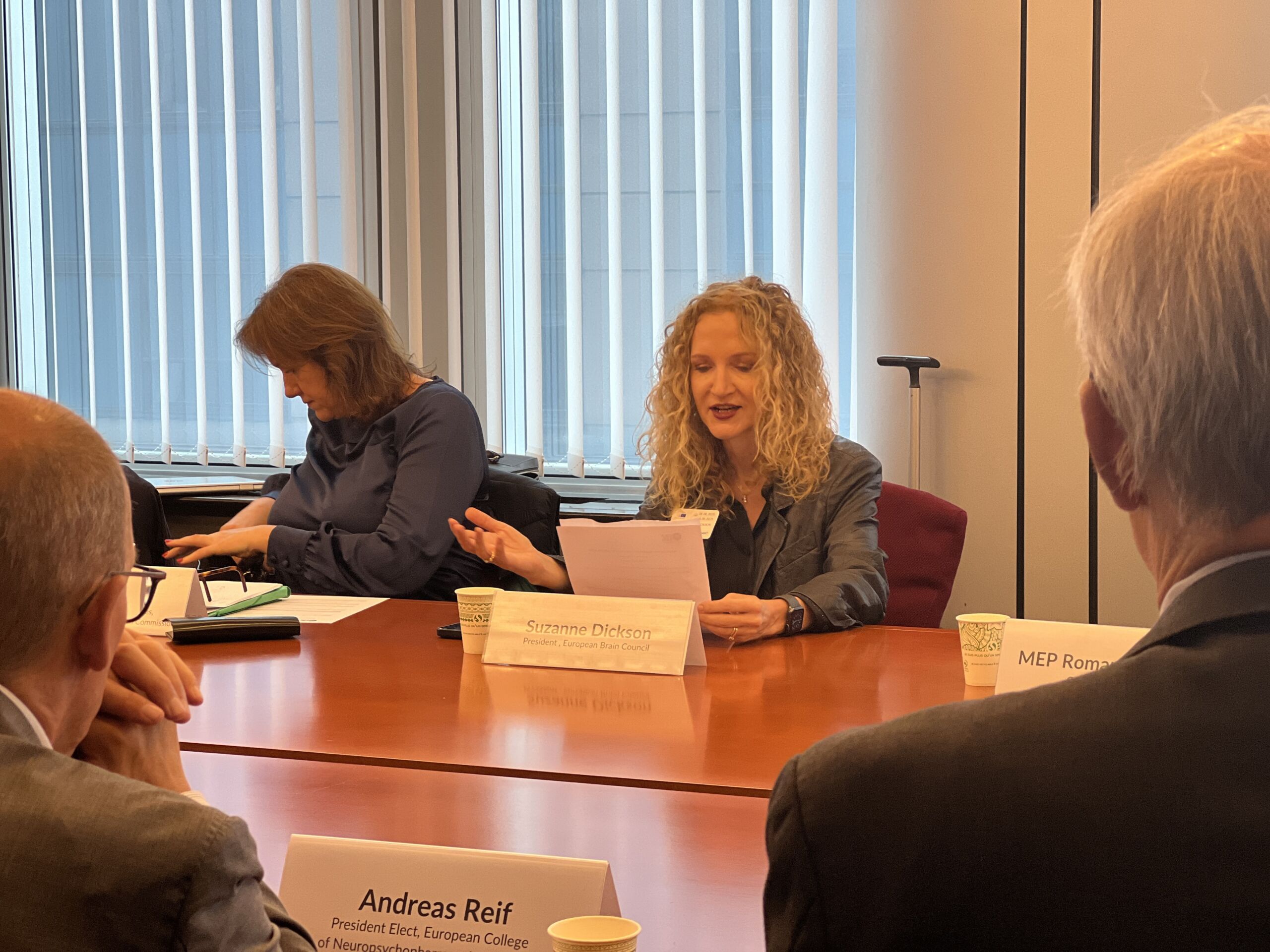
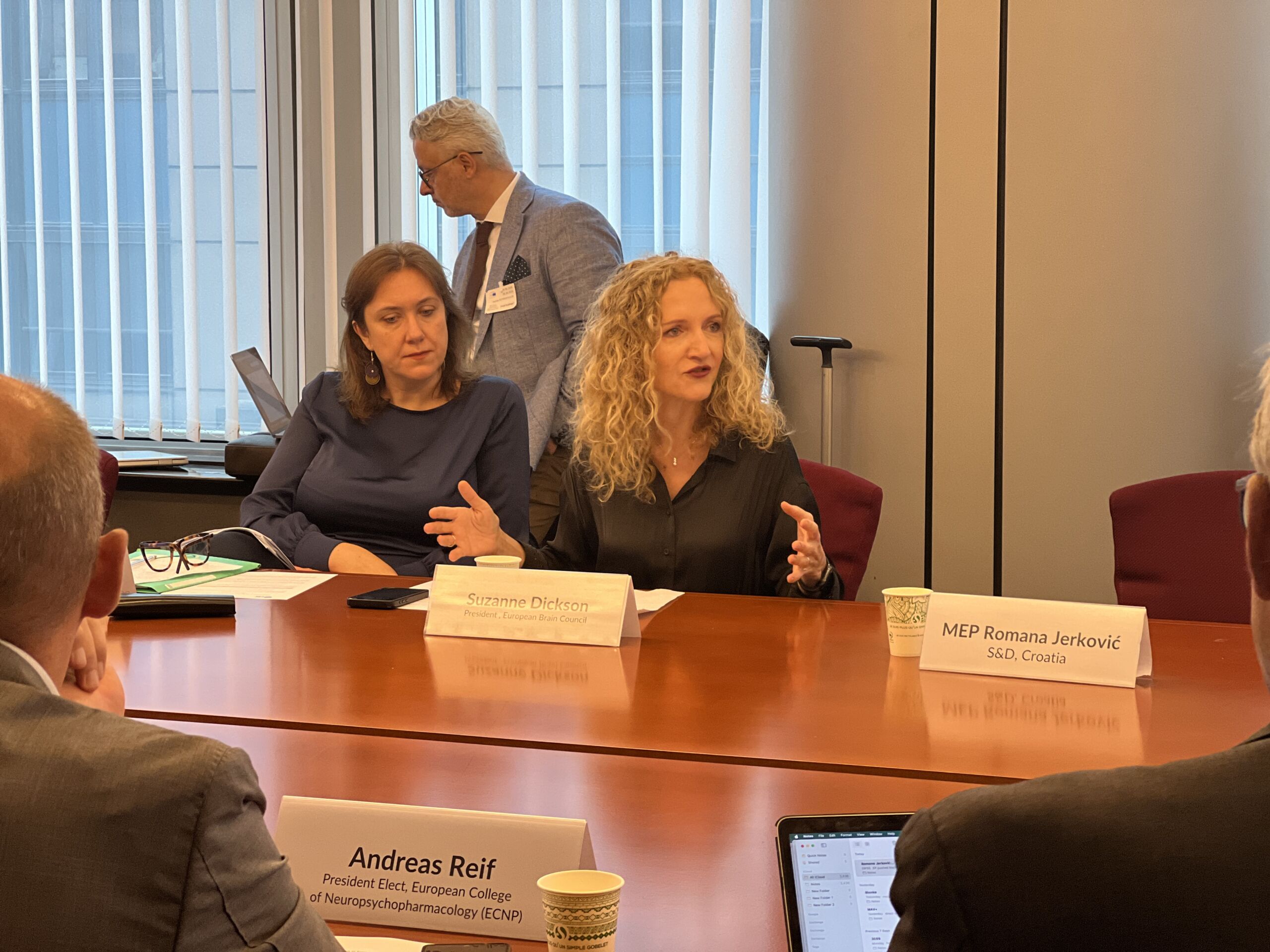
Professor Suzanne Dickson, President of the European Brain Council, welcomed the growing political and institutional momentum behind brain health but reminded participants of the long-standing underprioritisation of brain-related conditions. She expressed hope that the event would not only address existing challenges but also translate shared goals into lasting action:
“Europe has the knowledge, the talent and the collaborative spirit to lead the world to neuroscience, but we need the right environment to do so.”
 Prof. Suzanne Dickson, President, European Brain Council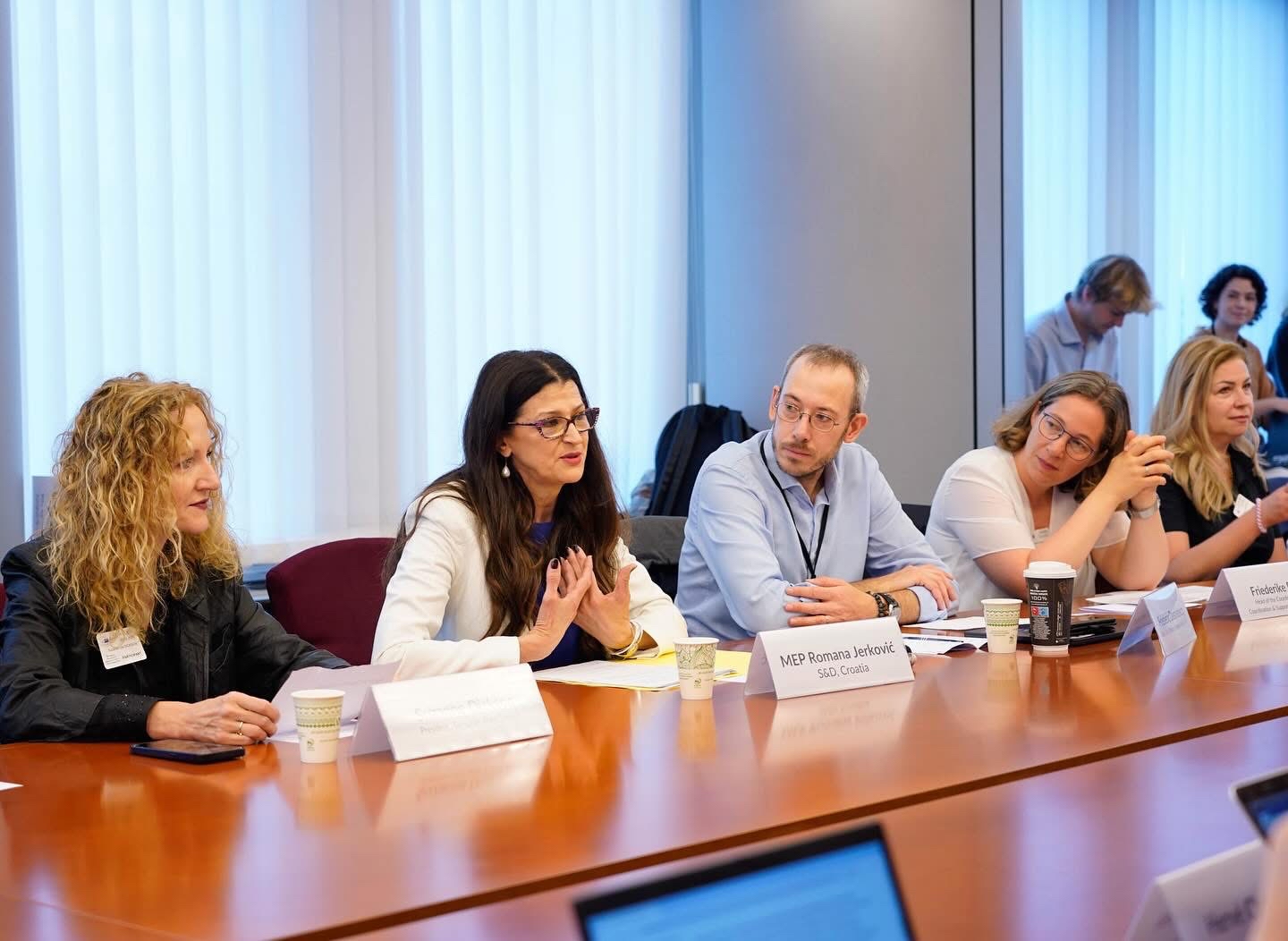
Watch the full event below:



The European Brain Health Partnership
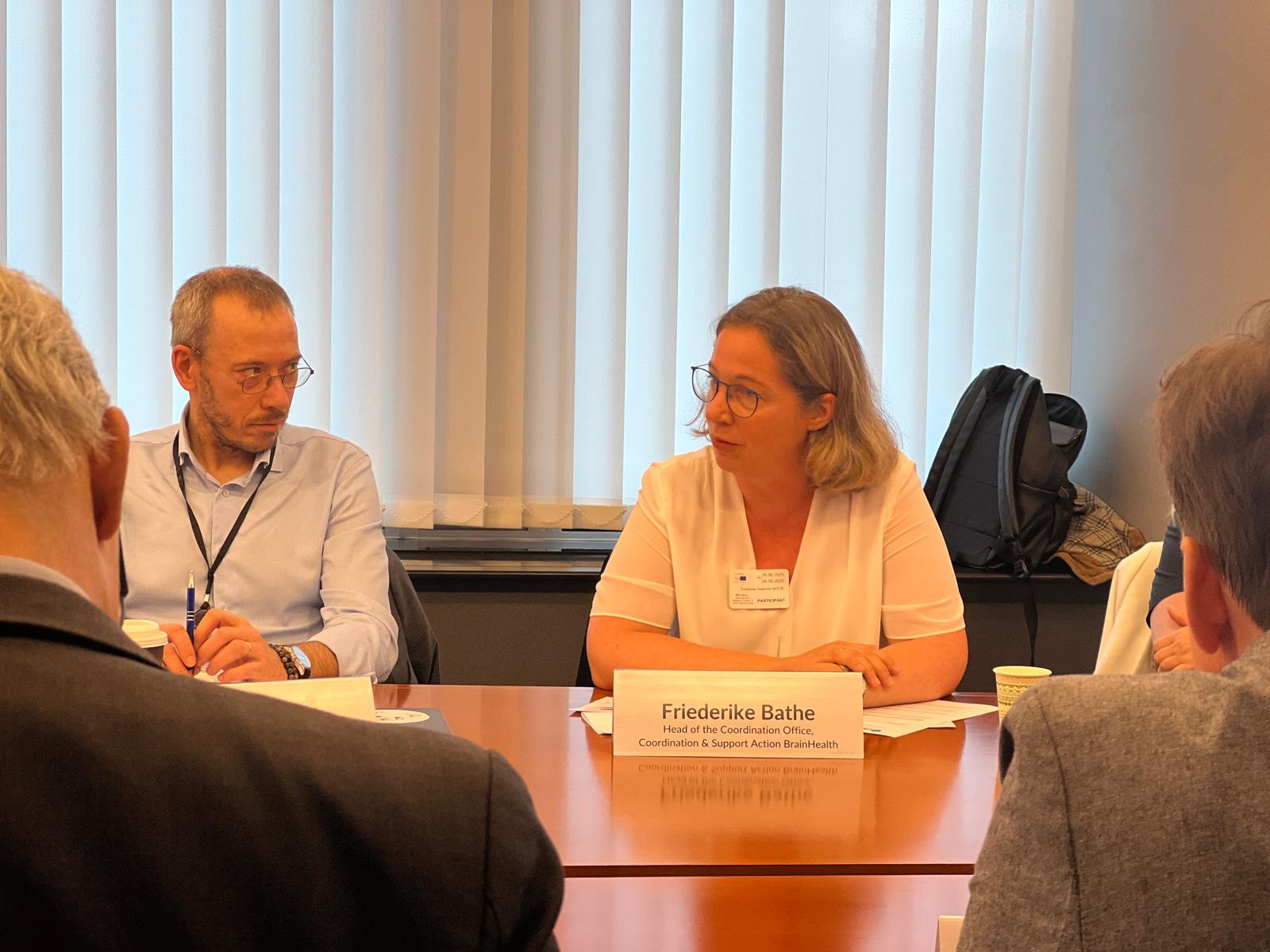
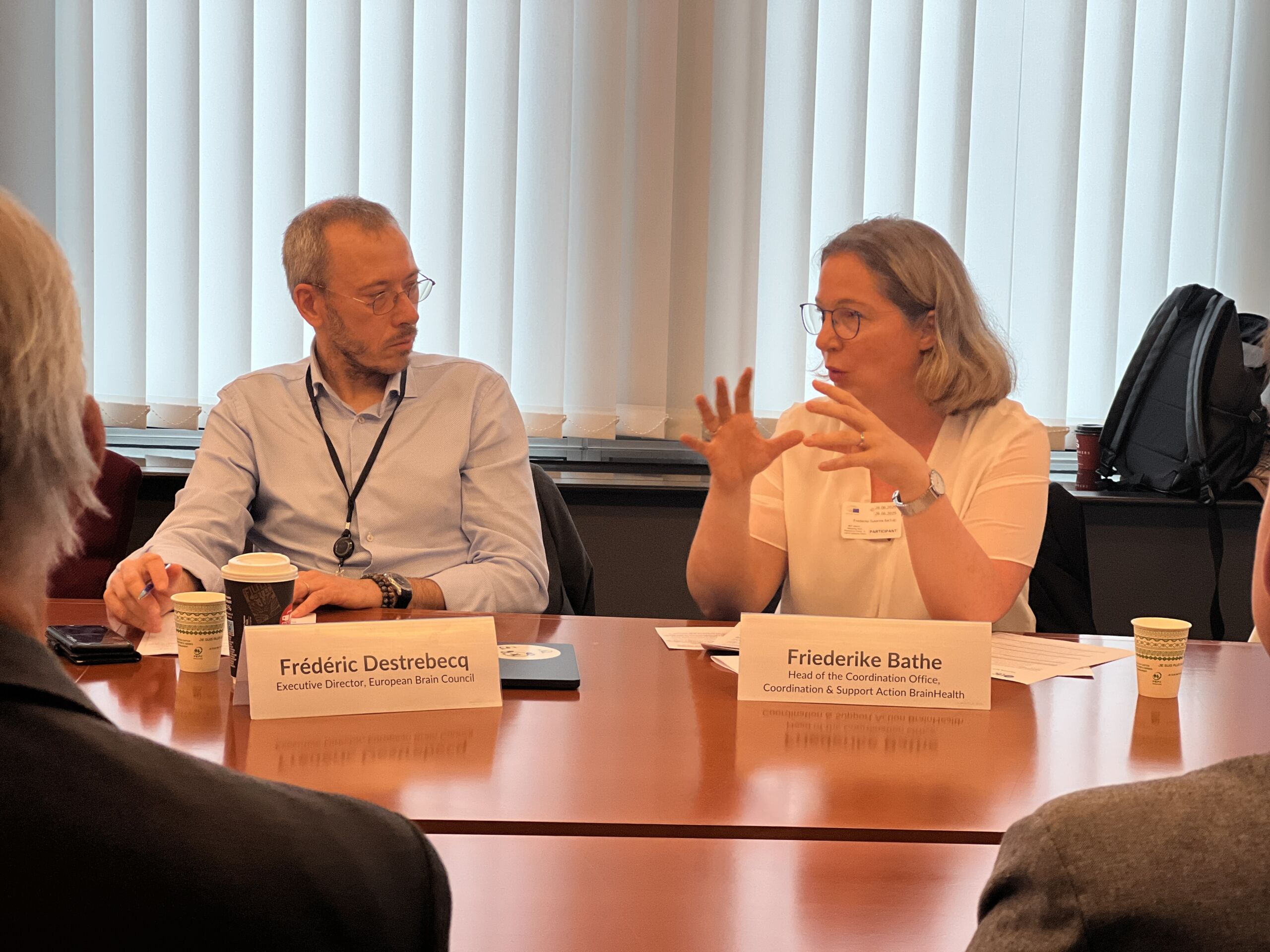
A key highlight was the introduction of the forthcoming European Brain Health Partnership, scheduled to launch in 2026. Friederike Bathe, Head of the Coordination Office for the Coordination and Support Action BrainHealth, outlined the initiative’s structure and goals. With over 50 partners from 31 countries, the partnership will mobilise €500 million—€350 million from national and regional funders and €150 million from the European Commission. Its focus will include strategic coordination of research, interdisciplinary collaboration, support for early diagnosis and treatment, and the integration of patient-centered perspectives.
Ethical and Regulatory Challenges
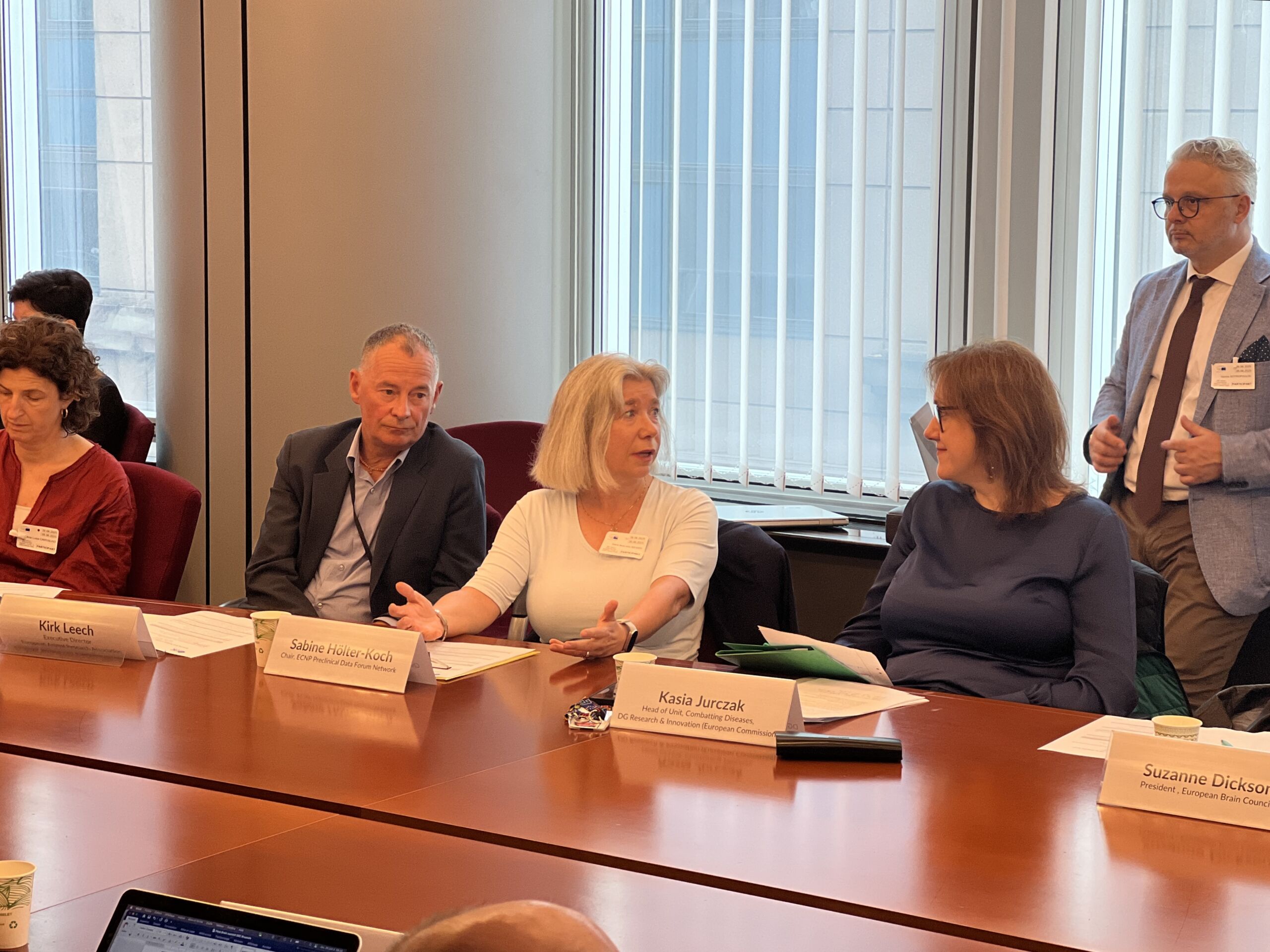
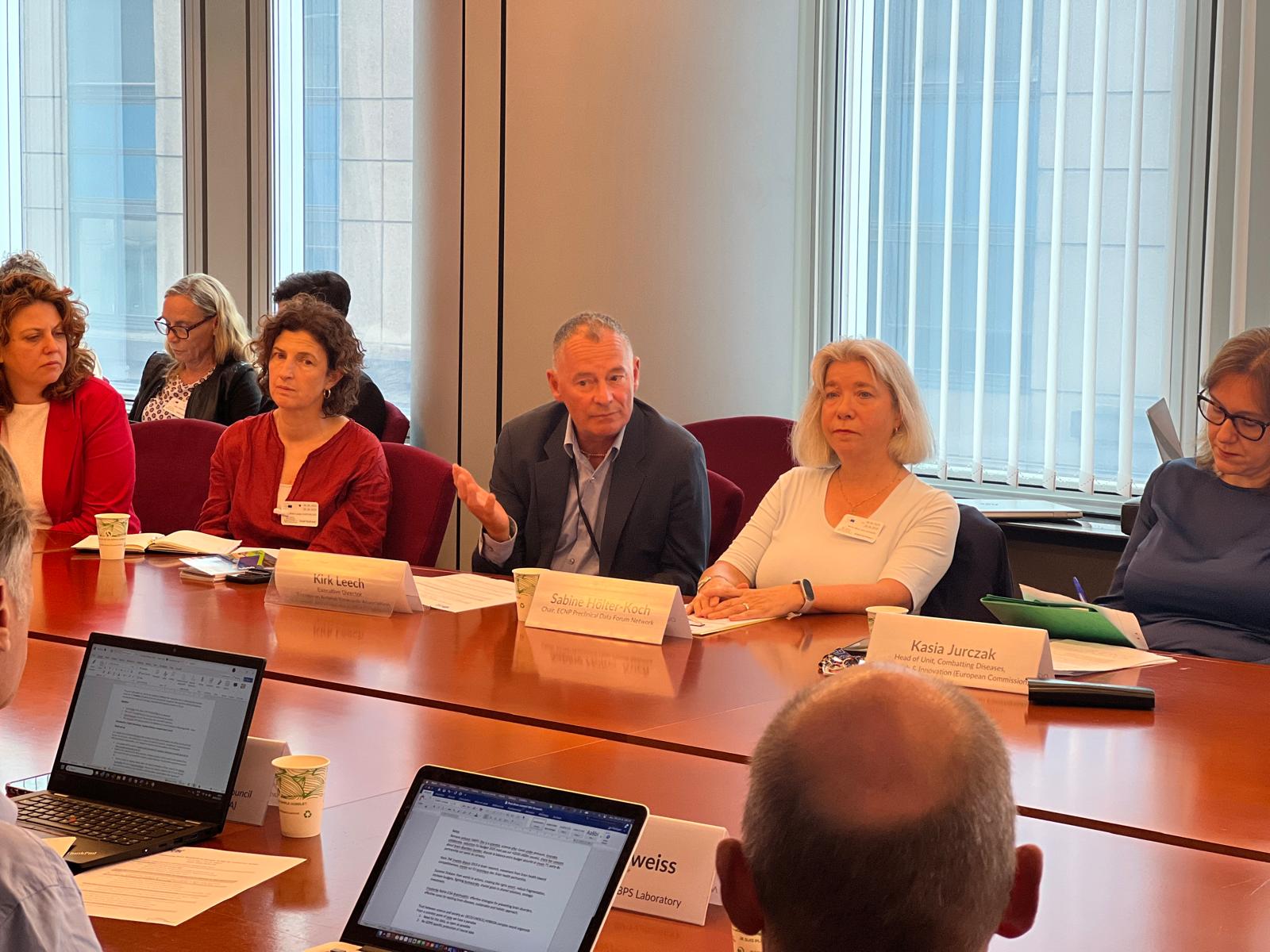
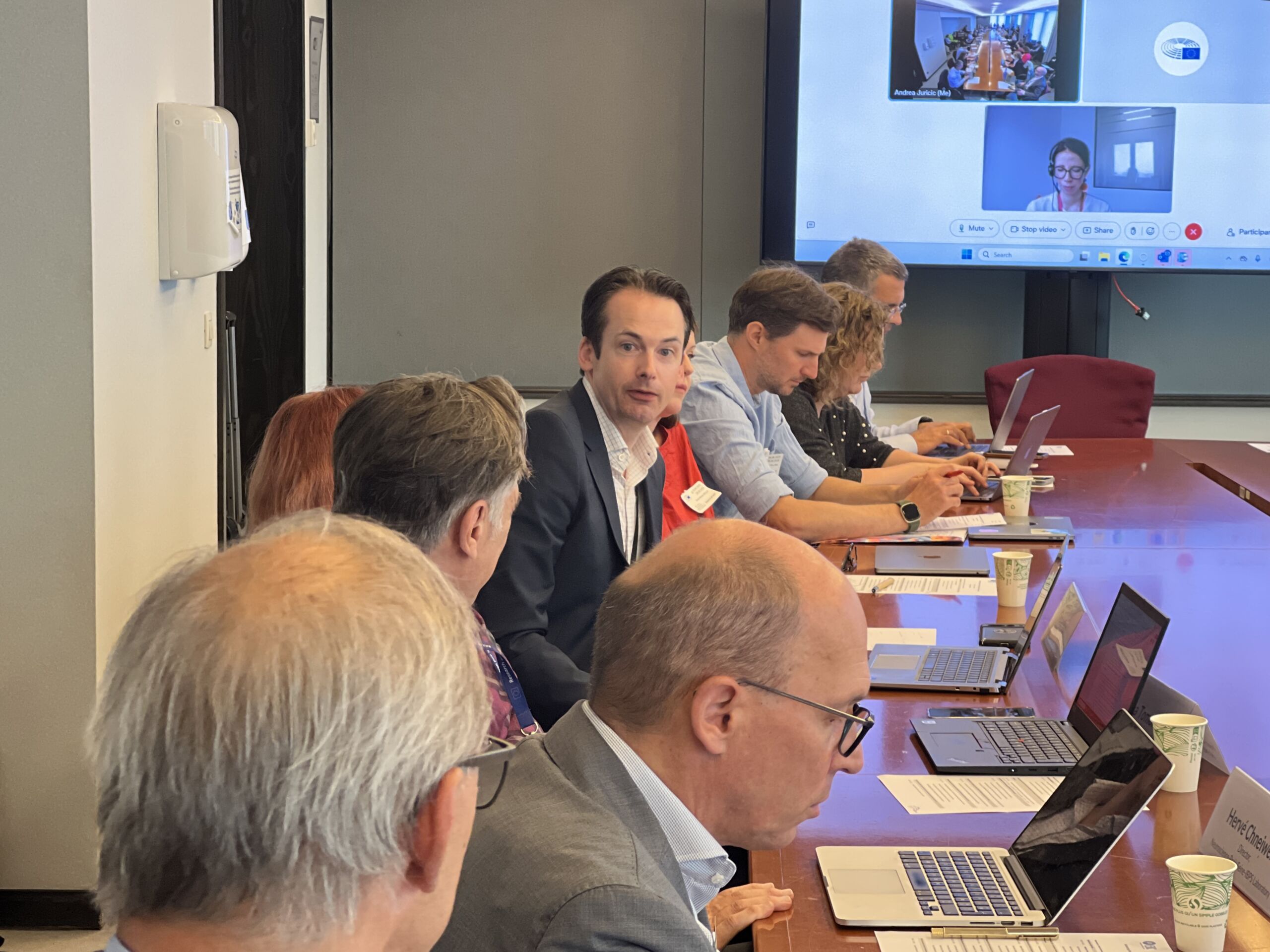
Ethical and regulatory questions were explored during a panel featuring Sabine Hölter-Koch, Chair of the ECNP Preclinical Data Forum, Kirk Leech, Executive Director of the European Animal Research Association, Hervé Chneiweiss, Director of the Neuroscience-Paris Seine-IBPS Laboratory, and Alice Accorroni, RRFS Representative to the Board of the European Academy of Neurology. The discussion addressed the complex tensions between innovation, public ethics, and regulatory standards.
Sabine Hölter-Koch focused on the importance of animal models where alternatives are not scientifically viable, while Kirk Leech pointed to the need for a more robust moral defence of animal research in the face of growing political pressure. Hervé Chneiweiss raised concerns about public trust and ethics in emerging neurotechnologies and organoid research, advocating for dynamic regulatory frameworks. Alice Accorroni warned of biases in large-scale datasets that exclude underrepresented groups and called for a stronger ethical lens in brain data governance.


Translating Research into Clinical Practice

The next fireside chat, featuring Alina Tomoiaga of the European Innovation Council and SMEs Executive Agency and Professor Andreas Reif, President-Elect of the European College of Neuropsychopharmacology (ECNP), examined the challenges in translating research into real-world clinical care.
Alina Tomoiaga highlighted the EIC’s role in shepherding research from early exploratory phases to market application. Andreas Reif advocated for a shift toward precision psychiatry based on biological mechanisms, noting that outdated diagnostic systems hinder innovation:
“I think whenever we do fundamental research, we should have translation already in mind very early on … not being something at the very end.”
 Prof. Andreas Reif, President-Elect of the European College of Neuropsychopharmacology (ECNP)



Promoting Research Excellence in the EU
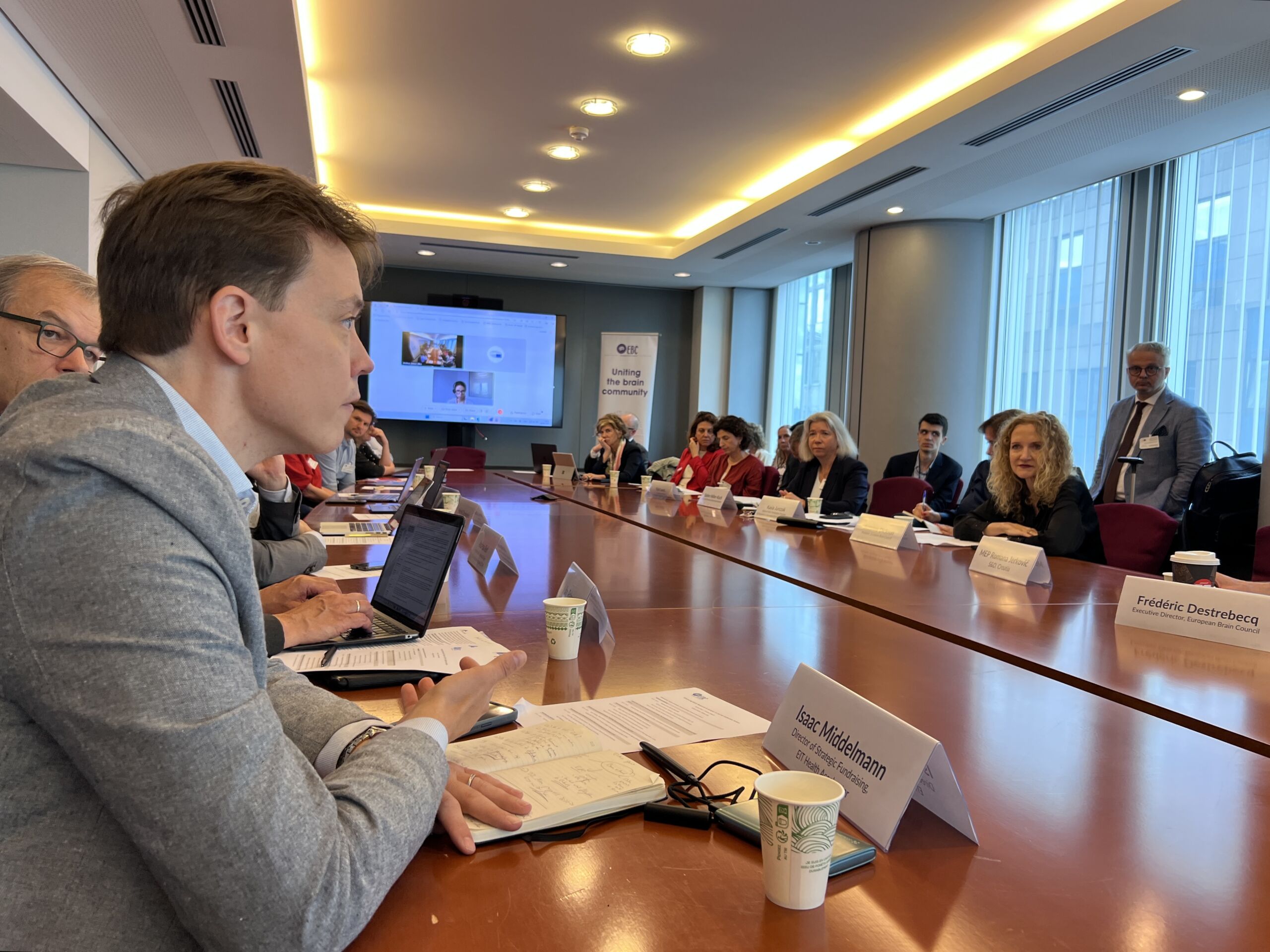
Looking toward the future of the European research ecosystem, a panel discussion explored pathways to safeguard and promote research excellence. Panellists included Jan Palmowski, Secretary-General of The Guild of European Research-Intensive Universities, Tomás Ryan, Board Member of the European Brain Council and Chair of the FENS Advocacy Committee, Kasia Jurczak of the European Commission, and Isaac Middelmann, Director of Strategic Fundraising at the EIT Health Accelerator.
The group emphasised the importance of cross-sector coordination, sustained funding instruments, and fostering ecosystems where public and private actors collaborate efficiently. Tomás Ryan and Jan Palmowski stressed that Europe must remain competitive on a global scale through better integration of basic and applied research, while Isaac Middelmann highlighted the need to link research excellence with tangible patient outcomes and scalable solutions.



A Call for Continued Action

The event closed with remarks from Prof. Suzanne Dickson, who reiterated the importance of collective responsibility and shared ambition:
“We are not just here to talk about the challenges, we are here to act. Let’s stand together to make this future a reality.”
Prof. Suzanne Dickson, President, European Brain CouncilThis event marked a significant milestone in shaping a European brain health strategy rooted in science, ethics, and patient engagement. With the European Partnership for Brain Health on the horizon, the groundwork is being laid for a coordinated, impactful, and inclusive research ecosystem that will define the next decade of neuroscience in Europe.