
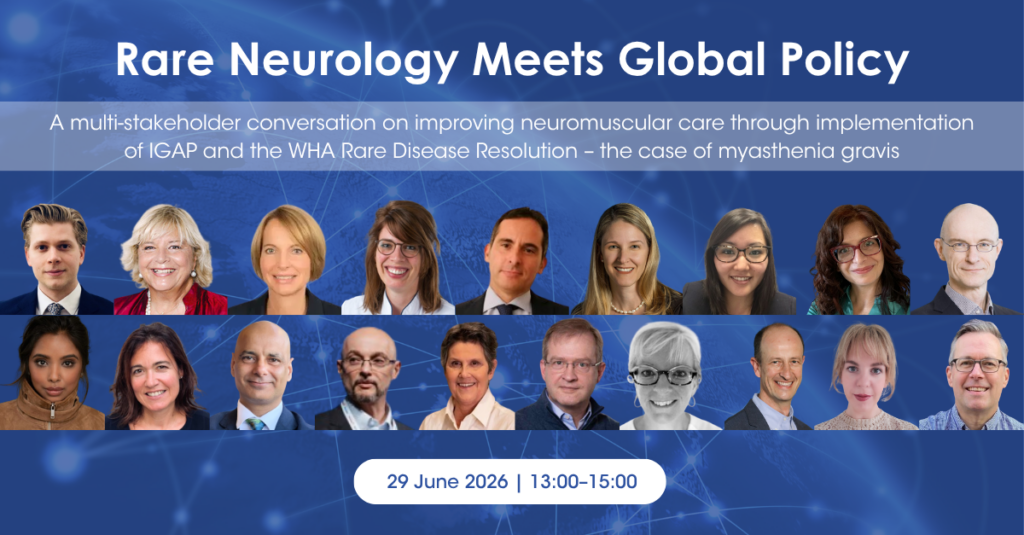
Event Highlight: Rare Neurology Meets Global Policy during the 12th Congress of the European Academy of Neurology


The meeting was chaired by Prof. Sameer Zuberi, EBC President-Elect.
1. Purpose & Strategic Framing
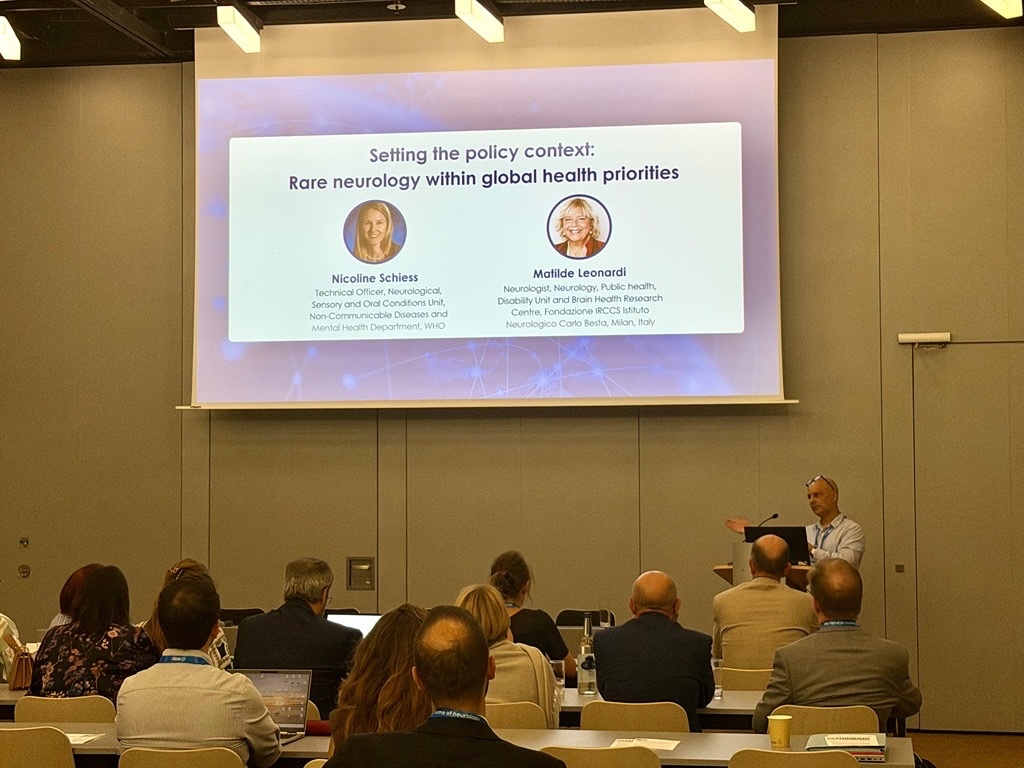
The EAN 2026 side event convened global policy representatives, scientific societies, clinicians, patient advocates, researchers and industry stakeholders to discuss how global policy commitments under the WHO Intersectoral Global Action Plan on Epilepsy and Other Neurological Disorders 2022–2031 and the WHA Rare Disease Resolution can be translated into practical improvements in rare neurology care pathways. The policy context was set by Nicoline Schiess (WHO) and Matilde Leonardi (Fondazione IRCCS Istituto Neurologico Carlo Besta, Milan), with Christophe Hotermans (Alexion) highlighting the need for greater awareness of the overall disease burden of MG and other rare neurological conditions.
Myasthenia gravis (MG) was used as a concrete implementation case. The discussion highlighted that MG reflects broader rare-neurology challenges: delayed or missed diagnosis, fragmented referral pathways, uneven access to specialist and multidisciplinary care, under-recognition of treatment burden and socioeconomic impact, limited integration of patient-reported outcomes, and unequal access to innovation.
The central conclusion was that global policy commitments will only become meaningful for patients if they are translated into measurable pathway improvements: earlier recognition, timely referral, coordinated specialist care, outcomes that reflect daily life, and accountability for implementation.
Key messages from the meeting
2.1 Rare neurology is a global policy and implementation priority
The WHO IGAP and the WHA Rare Disease Resolution provide a timely policy window to advance rare neurological and neuromuscular care. IGAP offers the neurological implementation architecture, including governance, diagnosis, treatment, care, research, innovation and data systems. The WHA Rare Disease Resolution adds a strong equity and inclusion mandate, calling for national planning, patient participation, centres of excellence, registries, data systems, research and equitable access.
Participants underlined that rare neurological diseases should not be treated as isolated niche conditions. Many rare diseases have neurological consequences, and their impact extends across functioning, cognition, mental health, education, employment, social participation and family life. A brain health and biopsychosocial approach can therefore help connect clinical care, public health, social participation and value assessment.
2.2 MG illustrates persistent care pathway gaps
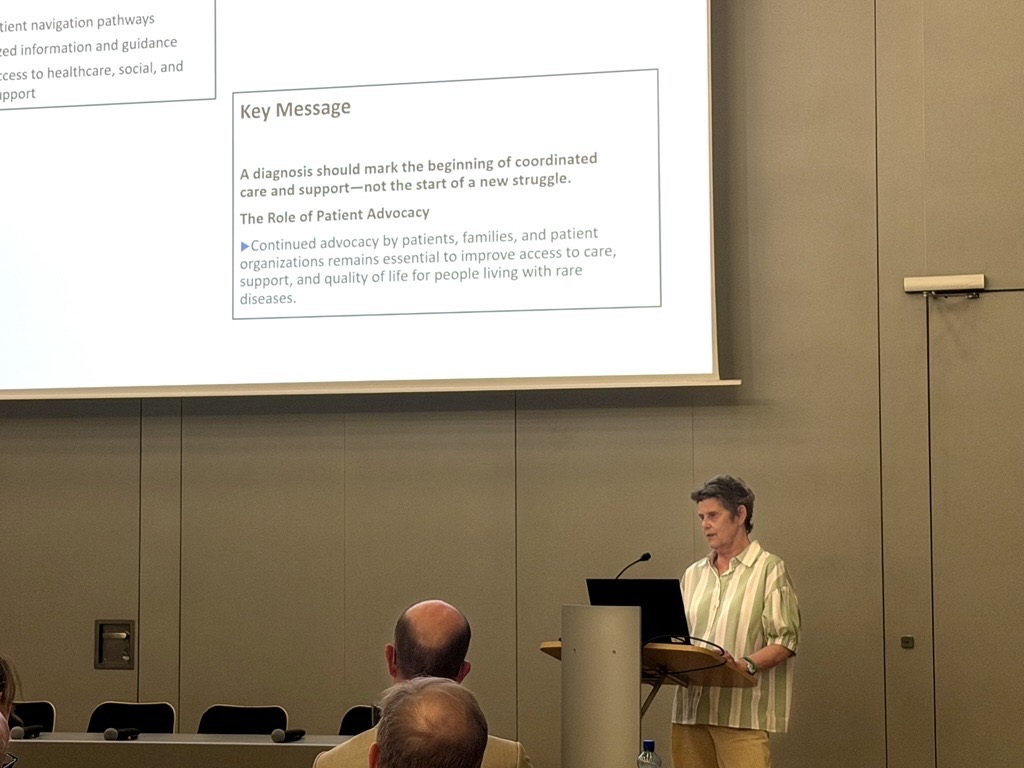
MG demonstrates how clinical innovation can fail to deliver its full value when care pathways remain fragmented. Evidence and stakeholder experience highlighted delays in recognition and diagnosis, limited access to specialist diagnostic capacity, variable referral to expert centres, inconsistent multidisciplinary care, and insufficient monitoring of outcomes that matter to patients. Patient and advocacy perspectives — shared by Lutgarde Allard (EU MG Association, EuMGA) and Monika Kaempf (ASRIMM), including national-level insights — emphasised that diagnosis is not the end of the journey.
Many patients face a “second odyssey” after diagnosis, including difficulty navigating services, accessing support, coordinating care across providers, and understanding available treatment options. The discussion also highlighted the need to address fatigue, fluctuating function, mental health, treatment burden, work and education impact, caregiver burden and quality of life.
2.3 Innovation must be matched by system readiness
Scientific progress in MG is advancing, but implementation is uneven. New and emerging therapies, digital tools, registries and real-world evidence can support better care, but only if health systems are prepared to use them appropriately. Participants stressed that innovation should be linked to earlier diagnosis, specialist referral, shared-care models, treatment optimisation and patient-relevant outcomes. Better data are needed to assess not only clinical effectiveness, but also functioning, fatigue, mental health, caregiver impact, socioeconomic burden and long-term quality of life. This evidence base, drawing on the Rare Brain Disease Ecosystem work presented by Vinciane Quoidbach (EBC), helped set the scene for pathway optimisation.
2.4 Care pathways should become learning systems
A recurring message was that care pathways must go beyond describing the patient journey — they should define who acts, when, where and with what responsibility. Pathways should include symptom-based entry points, red flags, referral criteria, escalation routes, expert-centre coordination, local shared care, multidisciplinary input, patient-reported outcomes and feedback loops for improvement.
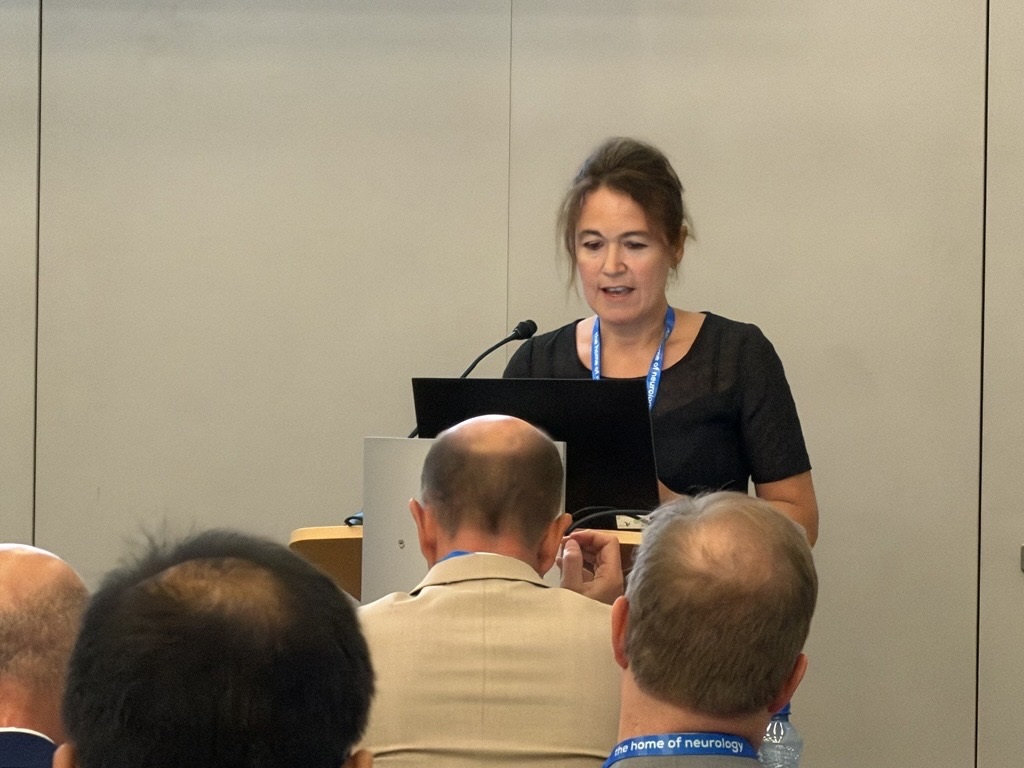
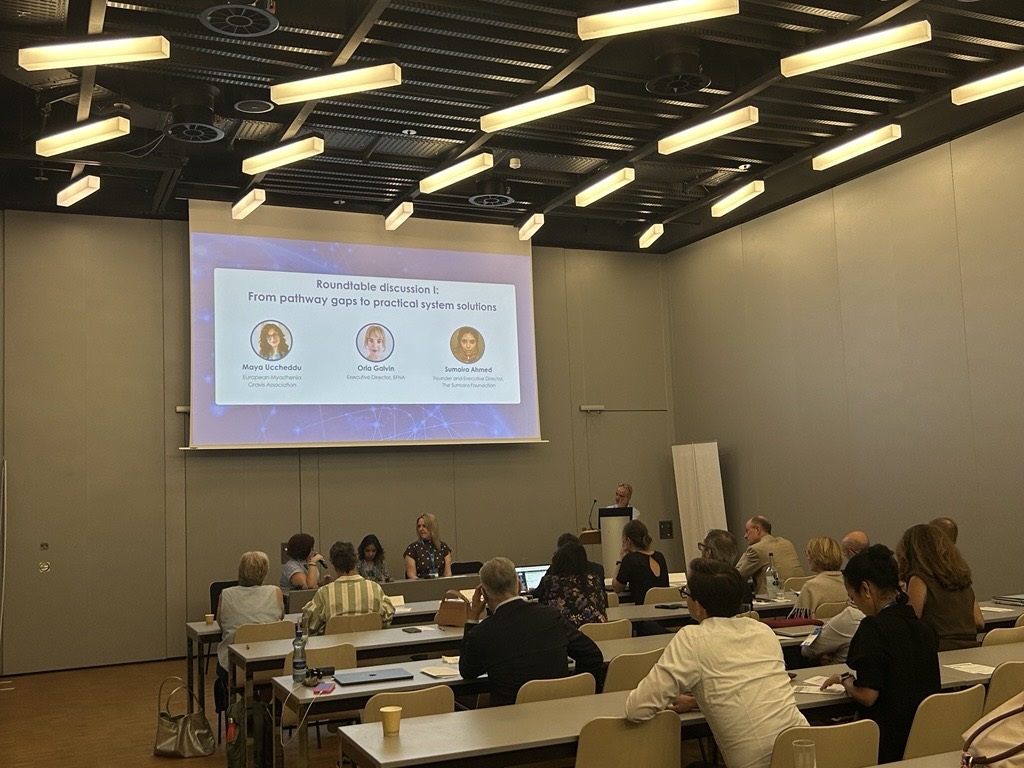
This theme was explored during the first roundtable discussion, moderated by Sameer Zuberi (EBC President-Elect), with contributions from Anne Bruijnes (on behalf of the European Academy of Neurology (EAN), Maastricht University Medical Centre+), Massimiliano Filosto (on behalf of EAN, University of Brescia), Maya Uccheddu (EuMGA / Associazione Italiana Miastenia), Orla Galvin (European Federation of Neurological Associations), Holm Graessner (ERN-RND), Corinna Hermann (UCB), Adrian Kielhorn (Alexion) and Sumaira Ahmed (The Sumaira Foundation).
European and national actors have complementary roles. Scientific societies can support standards, education and guideline implementation. ERNs can provide knowledge frameworks, referral criteria, disease modules and indicators. Patient organisations can co-design and evaluate pathways. Industry can contribute evidence, real-world data and innovation expertise within transparent and independent frameworks. Policymakers and payers are essential to ensure implementation, financing and accountability.
Emerging priority areas
Priority 1 — Earlier recognition, diagnosis and referral
Participants identified earlier recognition and referral as a first implementation priority. MG symptoms can be fluctuating, invisible or misinterpreted, leading to prolonged diagnostic delay and undertreatment. Practical red flags, referral criteria and suspicion-based pathways are needed across primary care, emergency care, ophthalmology, respiratory care and other relevant specialties.
Proposed actions:
• Develop practical red flags and referral criteria for suspected MG and related rare neuromuscular or neuroimmune conditions.
• Strengthen access to specialist diagnostic expertise, including immunoassays and expert-centre input.
• Establish diagnostic centres of excellence or structured referral networks able to support MG and other rare neuroimmune conditions.
• Monitor time from symptom onset to diagnosis and from first consultation to specialist referral.
Priority 2 — Coordinated specialist and multidisciplinary care
The discussion reinforced the need for coordinated care models that combine specialist expertise with local delivery. Expert centres should coordinate diagnosis, treatment decisions and complex management, while routine monitoring, rehabilitation and support should be delivered closer to home where possible.
Proposed actions:
• Define a minimum rare-neurology pathway framework using MG as a demonstrator.
• Establish shared-care models connecting expert centres, local clinicians, rehabilitation, mental health, social care and patient organisations.
• Ensure each patient has a clear care plan and named coordination point.
• Use tele-expertise and digital follow-up to reduce geographic inequalities and support continuity.
Priority 3 — Patient-relevant outcomes, data and value assessment
Participants agreed that clinical scores alone do not capture the full burden of MG or rare neurological diseases. A minimum set of patient-relevant outcomes should be developed and embedded in routine care, registries, research and policy discussions.
Proposed outcome domains:
• functioning and independence;
• fatigue and fluctuating symptoms;
• mental health and wellbeing;
• quality of life;
• treatment burden, including long-term steroid burden;
• work, education and social participation;
• caregiver impact;
• patient experience of coordination and access.
These data should support pathway evaluation, real-world evidence generation, HTA discussions and advocacy for equitable access.
Emerging stakeholder commitments
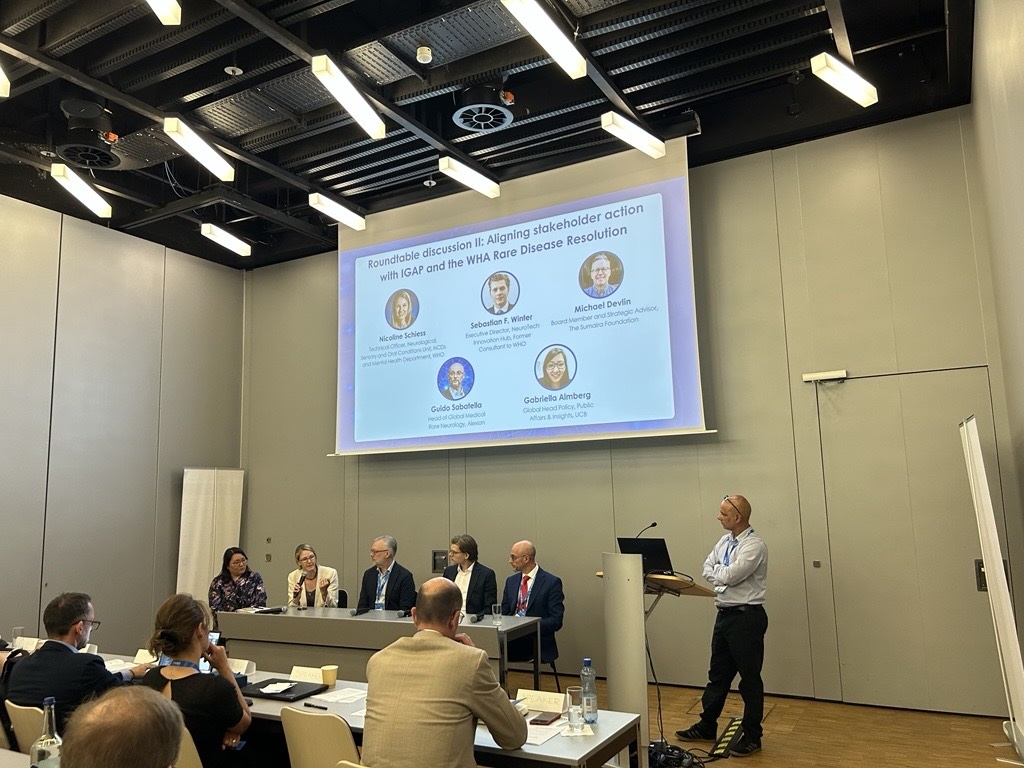
The meeting pointed to a shared commitment to move from broad policy alignment to implementation — a theme carried through the second roundtable discussion, moderated by Sameer Zuberi with contributions from Sebastian F. Winter (NeuroTech Open Innovation Hub, former Consultant to WHO), Nicoline Schiess (WHO), Michael Devlin (The Sumaira Foundation), Gabriella Almberg (UCB) and Guido Sabatella (Alexion), on aligning stakeholder action with IGAP and the WHA Rare Disease Resolution.. Stakeholders can contribute as follows:
Concluding message
The meeting confirmed that the challenge is not the absence of policy ambition or scientific progress, but the gap between policy, innovation and implementation. MG offers a practical test case for transforming rare-neurology care: earlier diagnosis, better referral, coordinated specialist and multidisciplinary care, and systematic measurement of outcomes that matter to patients and families.
The next phase should focus on turning these priorities into an implementation framework with defined responsibilities, measurable indicators and one or more pilot settings. While MG is the case example, the lessons are transferable across rare neurological and neuromuscular diseases.
Acknowledgement: We would like to thank Alexion and UCB for sponsoring this event.
taxation planning
Eiusmod tempor incididunt ipsum ut labore dolore magna aliqua. Ut enim minim veniam duisy ipsum sed quis.